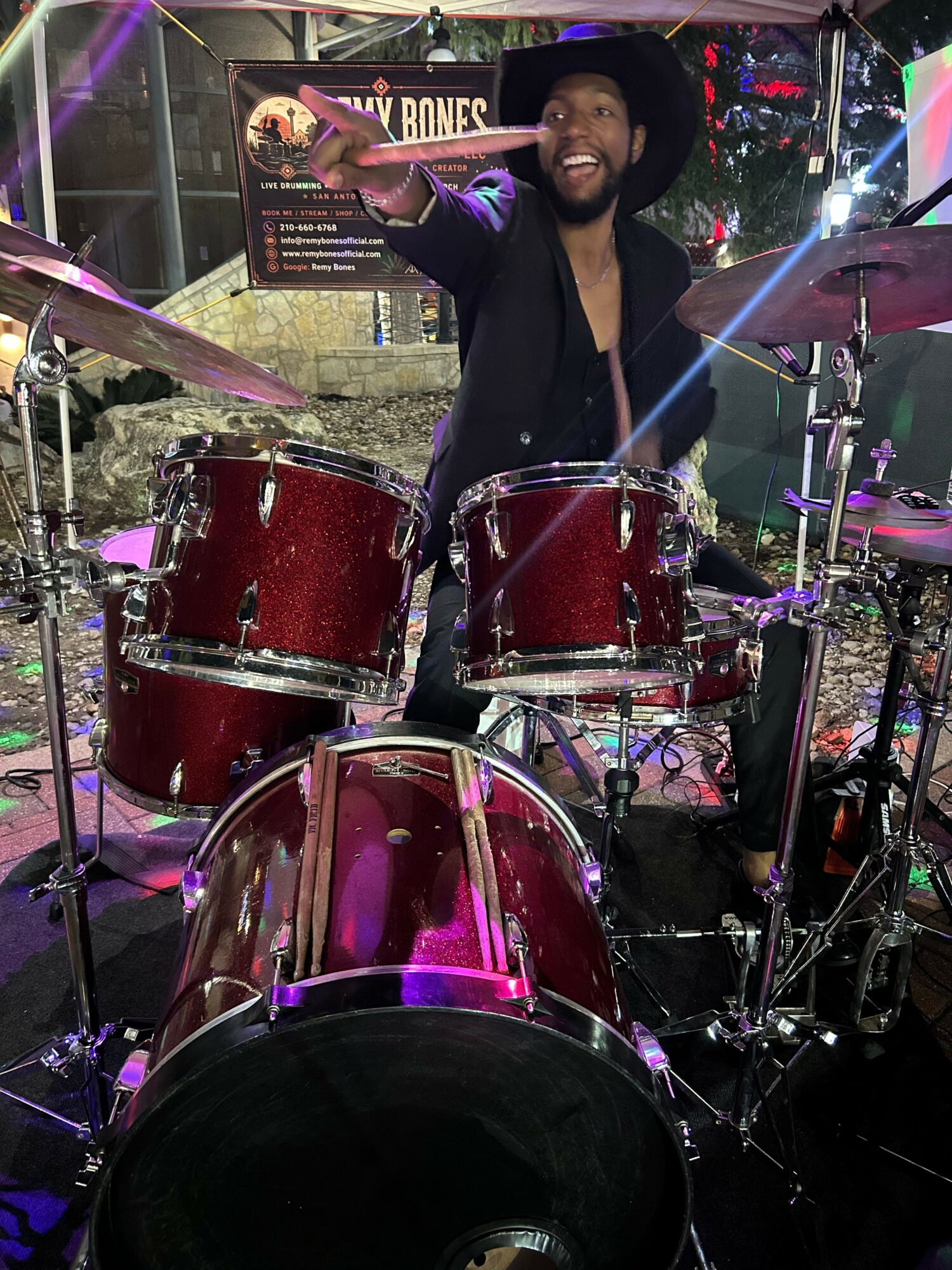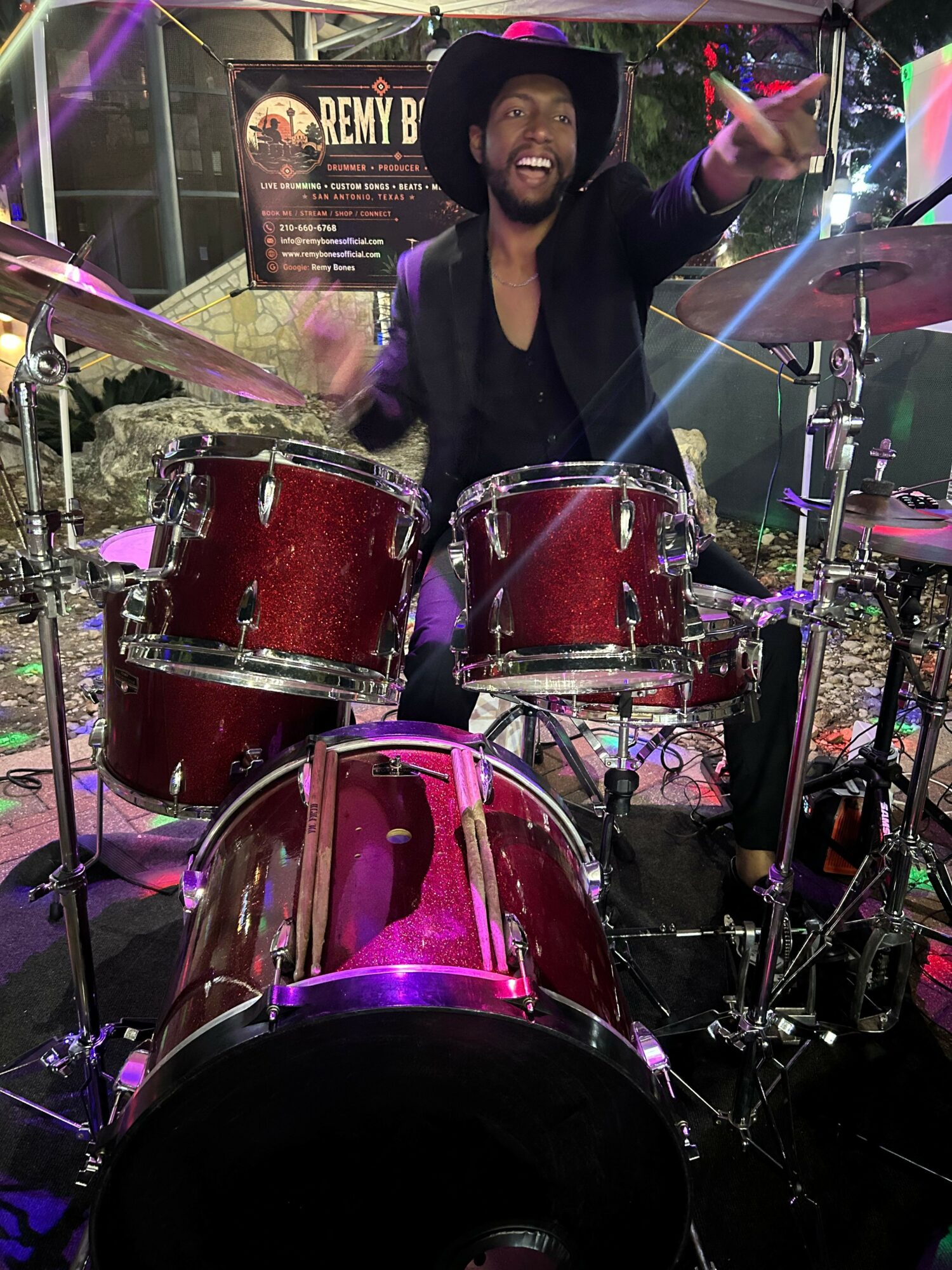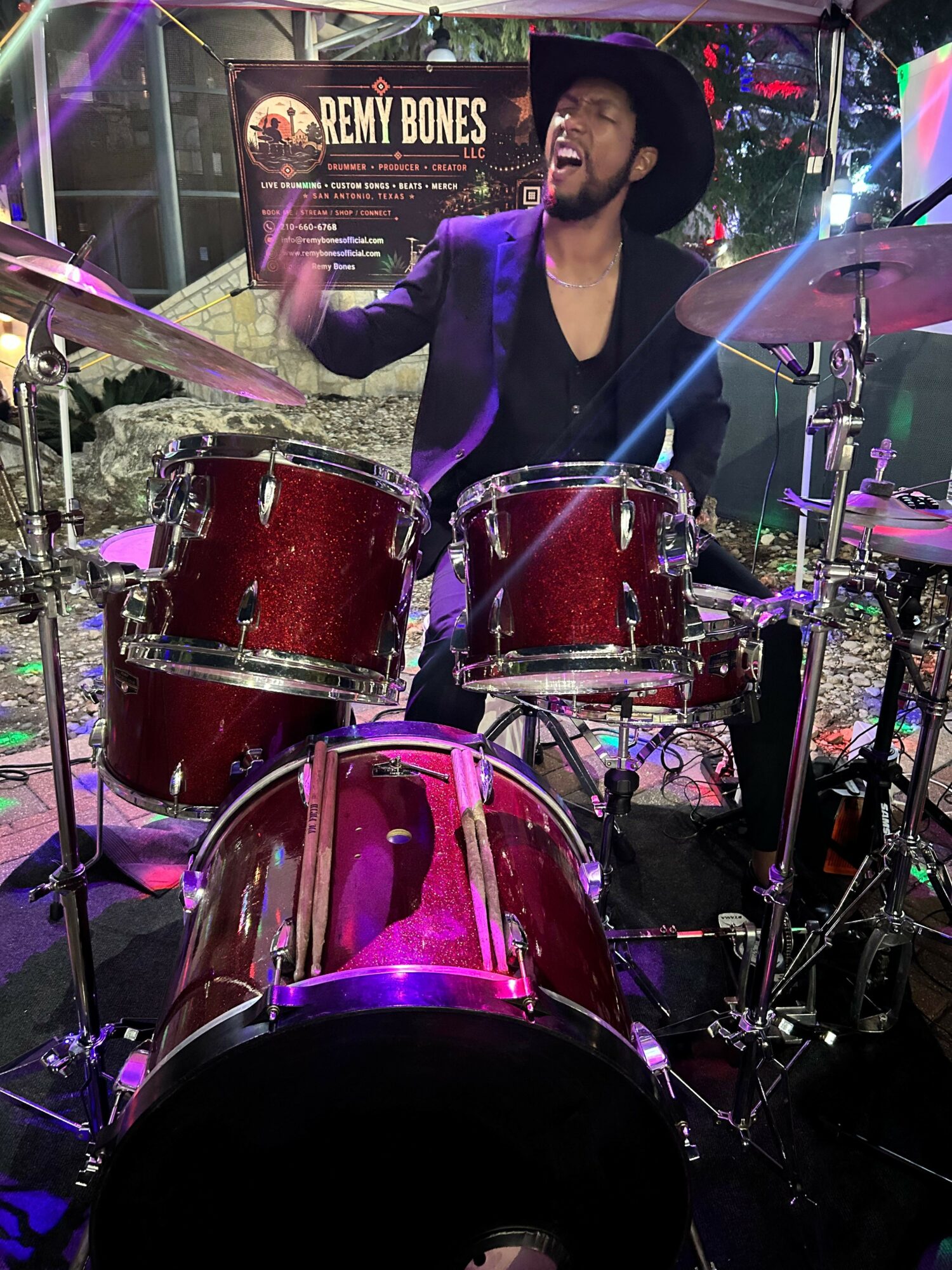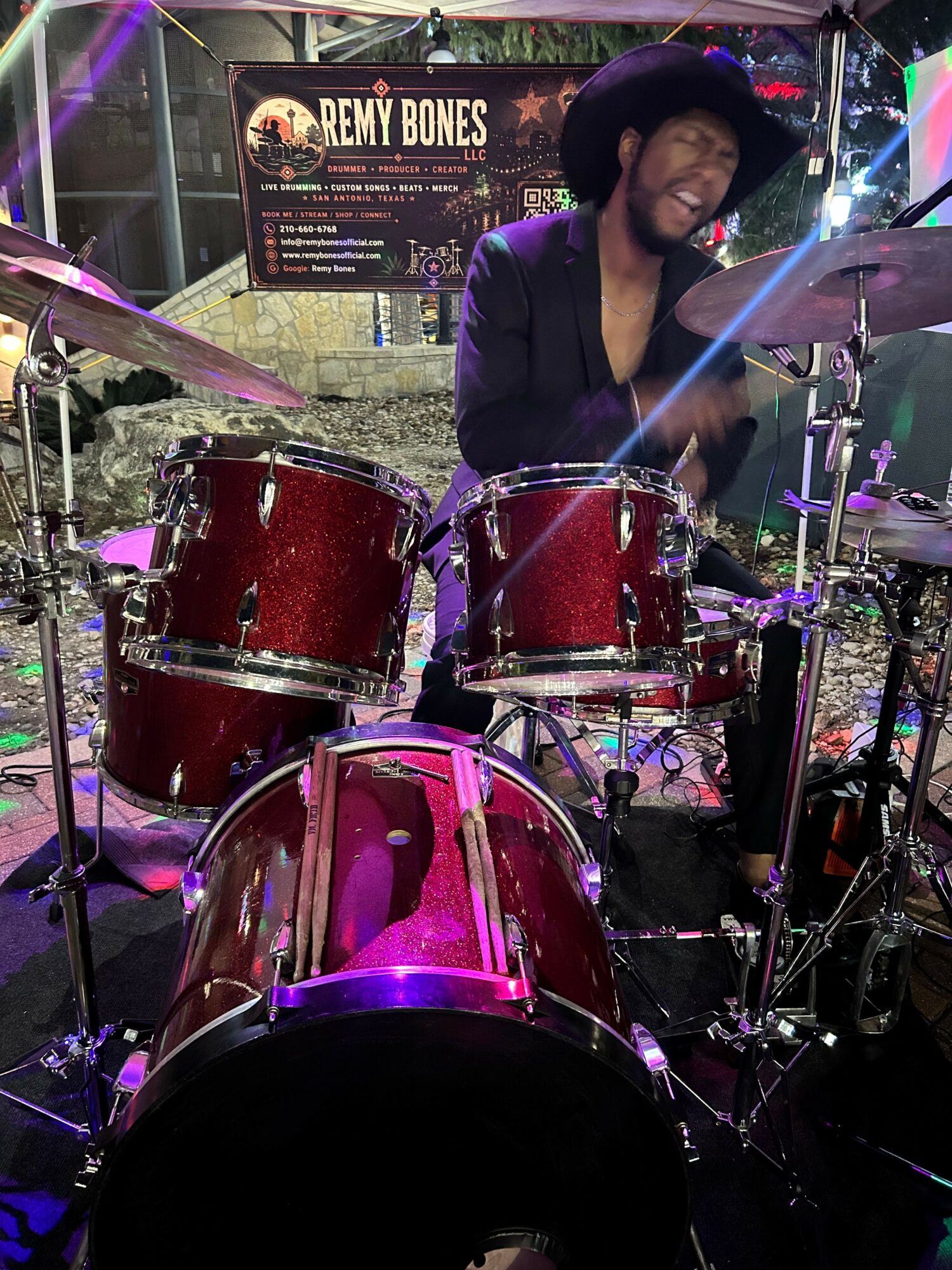




Today we’d like to introduce you to Remy Bones.
Hi Remy, we’d love for you to start by introducing yourself.
YOUR STORY
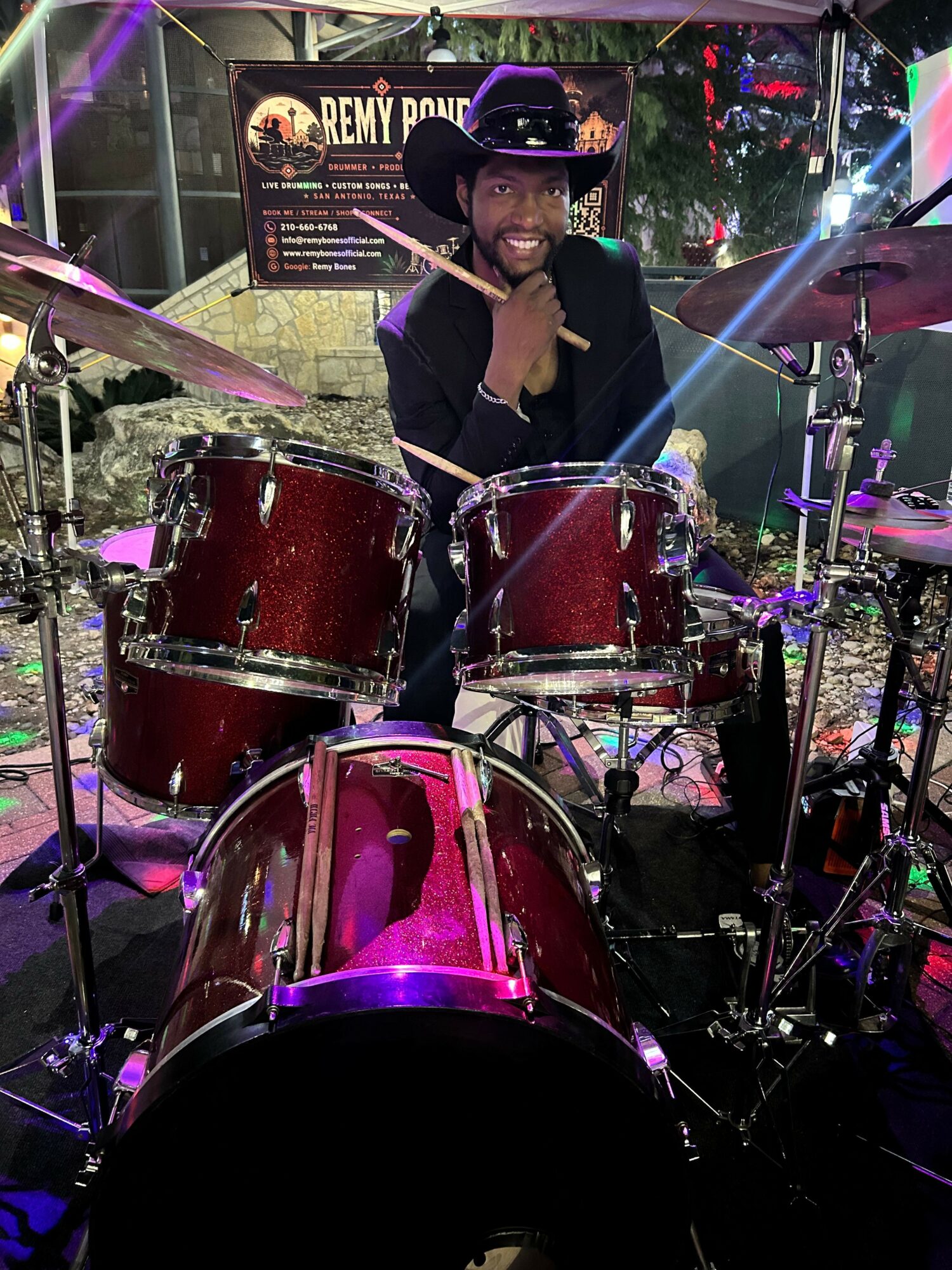
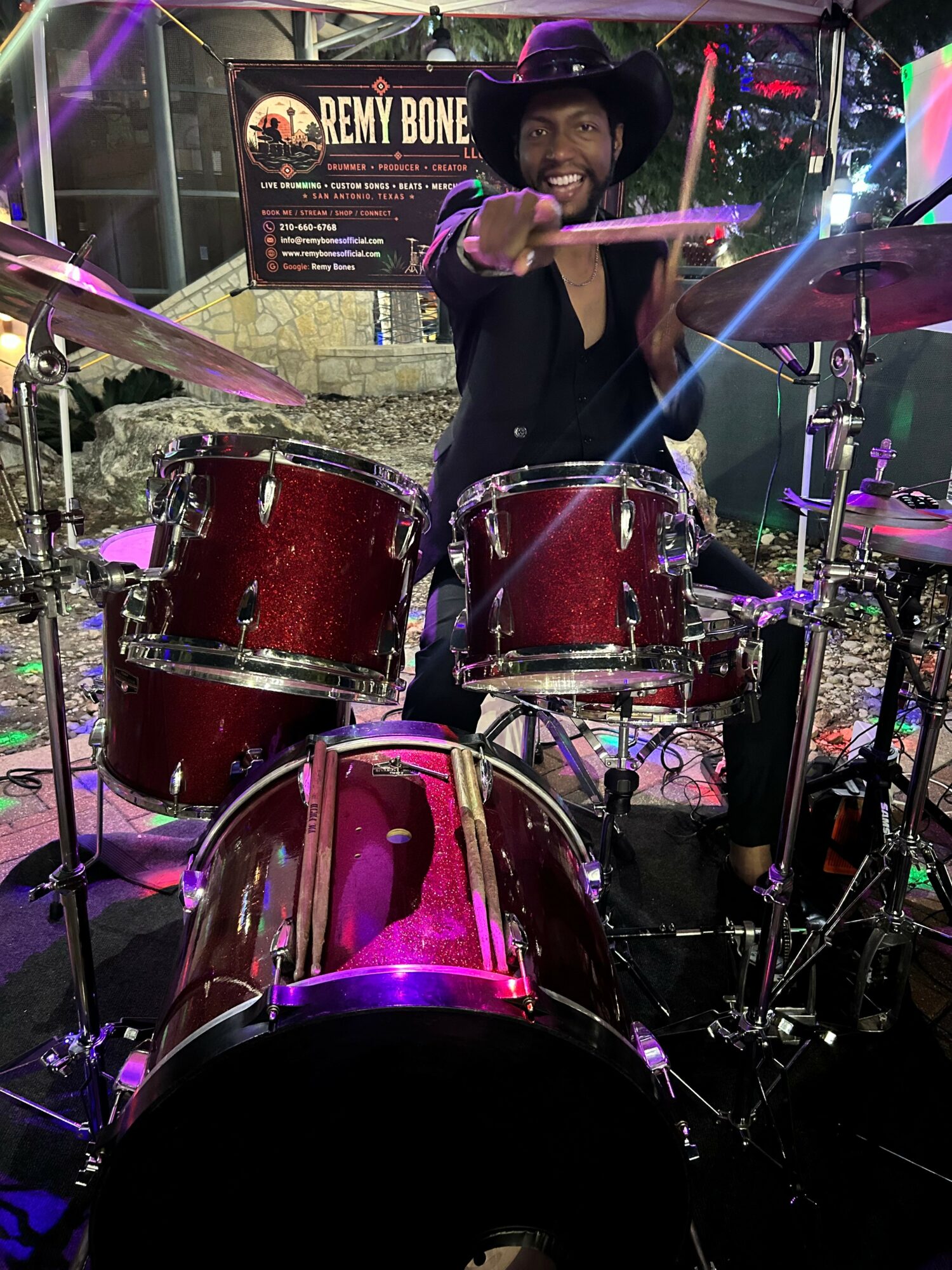
Before there was Remy Bones LLC, a mobile app or a restaurant residency, there was simply me, my drums and Downtown San Antonio.
My name is Jeremy Evans, but San Antonio knows me professionally as Remy Bones. I was born in Omaha, Nebraska, but I was raised in San Antonio’s 210. This city is more than where I live—it is my home and the cultural heartbeat of everything I am building.
Music entered my life long before I understood that it could become a business. As a young musician, I played drums with bands at the venue that was then known as the White Rabbit, now the Paper Tiger. Those early performances taught me how to work with other musicians, command a stage and connect with a live audience. Eventually, however, I realized that my path would be different. I was not meant to spend my entire career waiting for a band, promoter or venue to give me permission to perform.
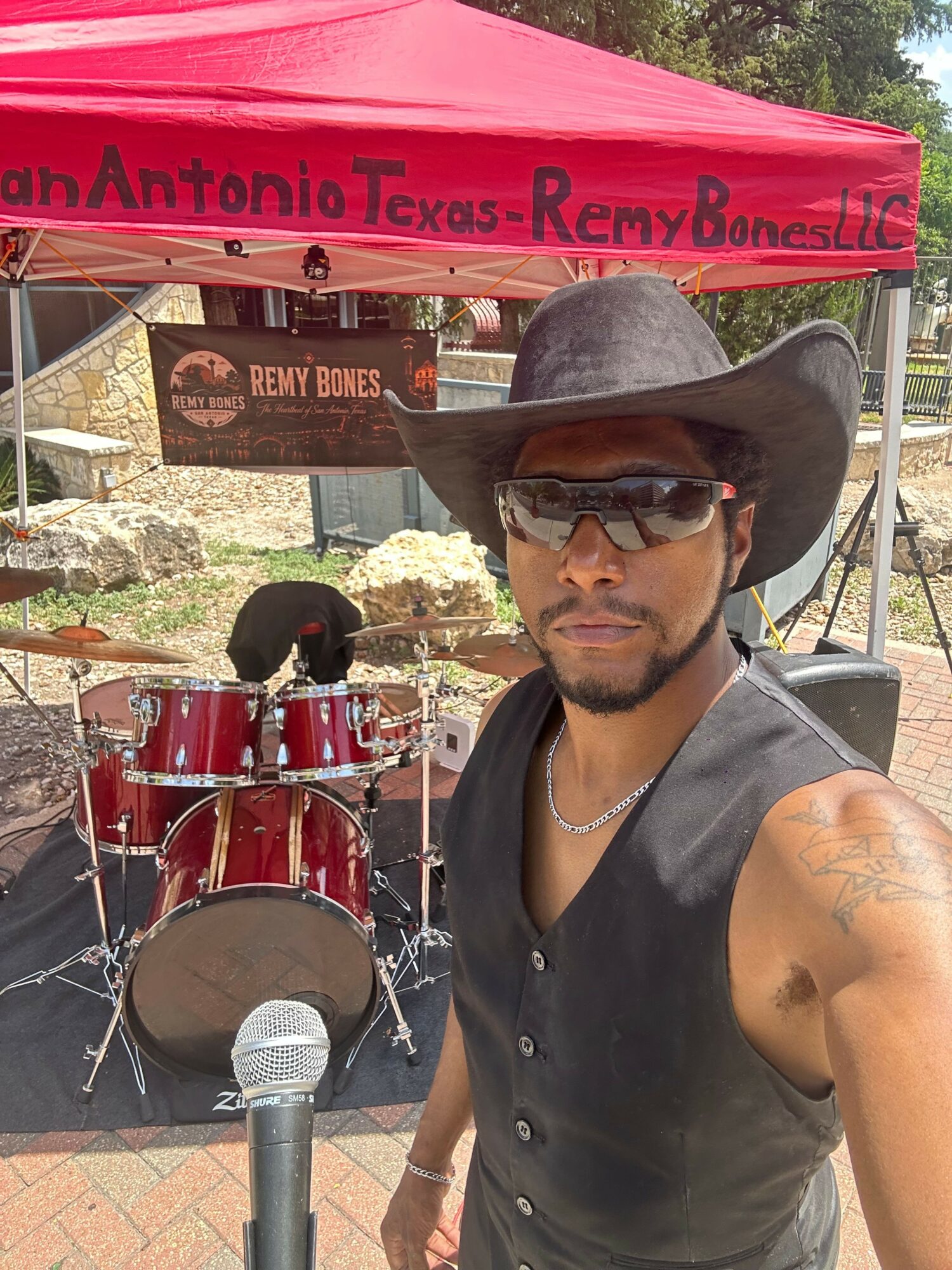
In 2016, I acted on that realization and began taking my drums into Downtown San Antonio to perform directly for the public. At the time, I was single and did not have any children yet. I was working at Domino’s, figuring out my direction and creating opportunities for myself. I did not have a major sponsor, a booking agent or a large production budget. What I had was my talent, my drums and the willingness to go outside and build something from the ground up.
Street performing changed the way I understood entertainment. People did not only want to stand back and watch me play. They wanted to participate. They wanted to request songs, dance, sing, take pictures, record videos and become part of the moment. Visitors also began asking me where they should eat, what they should see and what else they should experience while they were in San Antonio.
That is when I began to recognize that what I was creating could become more than a drum performance. It could be live entertainment, audience participation, hospitality, tourism and community engagement happening at the same time.
In 2016, I also participated in Centro San Antonio’s Houston Street Live program. That experience showed me there was precedent for organized, scheduled and compensated street entertainment downtown. In 2019, KSAT 12 featured my street drumming and the way I connected with people through music in its “What’s Up South Texas” series. Interviews and profiles through VoyageSanAntonio and CanvasRebel further documented my development as a San Antonio artist and creative entrepreneur.
Over the years, my street-performance concept evolved into The Remy Bones Experience™. The idea is simple: you pick the song, I play the drums and everyone sings along. You are the star, and I am your band.
In 2025, I produced a multidisciplinary version of The Remy Bones Experience™ at Historic Market Square. The production brought together live drums, a DJ, dancers, live painting, photographers and multiple performers under one coordinated experience. That project showed me that the vision could grow beyond one performer and become a platform that creates opportunities for other artists and creative professionals.
In 2026, I officially formed Remy Bones LLC and began transforming nearly ten years of public performance into a professional business and operating system. I obtained business insurance, a Texas Sales and Use Tax Permit, City of San Antonio vendor approval, digital payment processing and professional booking infrastructure.
I also developed The Remy Bones Experience™ mobile app. Through the app, people can request songs, join the karaoke queue, watch online, leave feedback and complete surveys that help me measure the experience. Technology now allows the audience to participate before, during and after a performance instead of simply watching from the sidewalk.
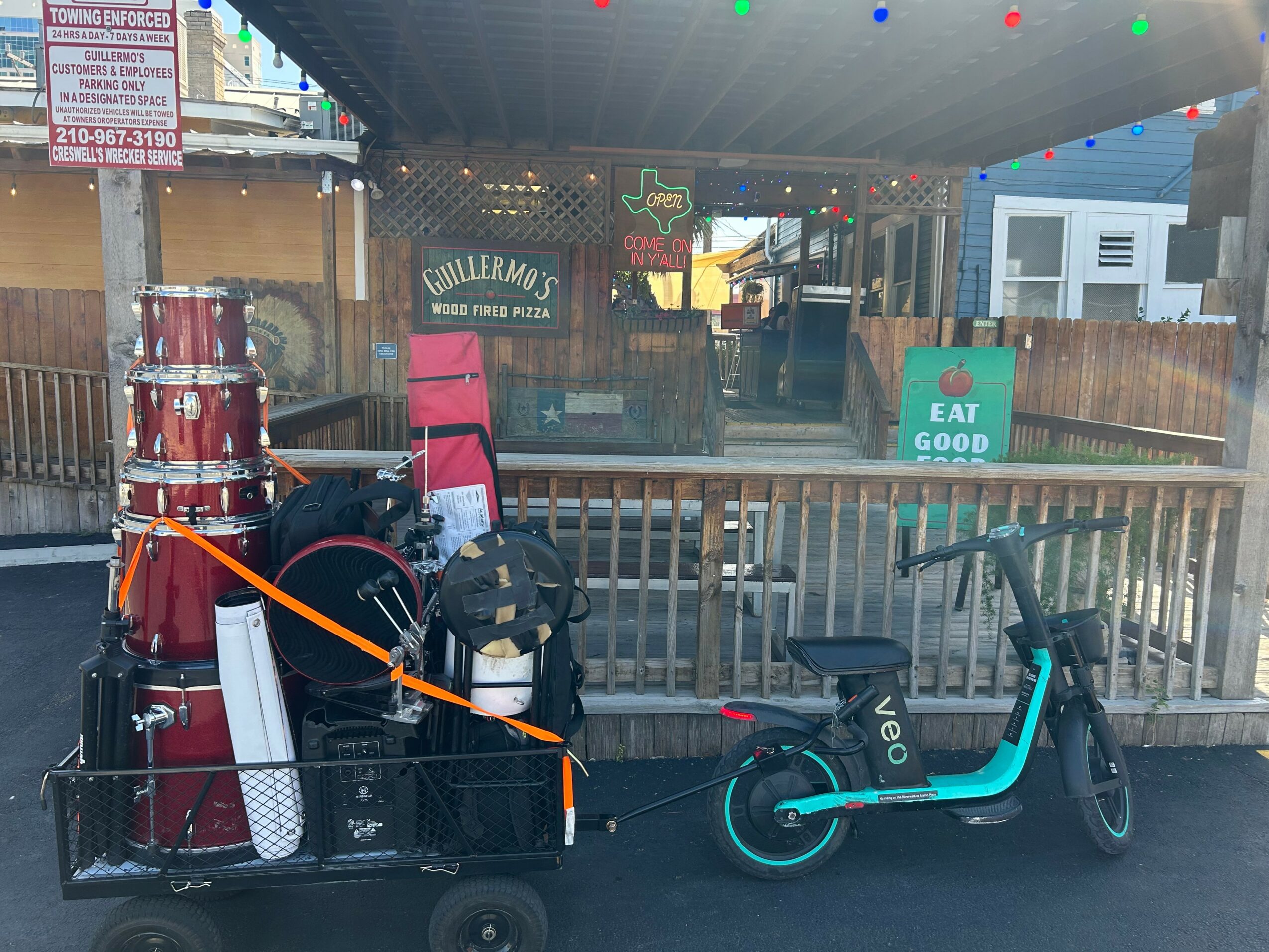
Through City Council District 1’s Music to Business program, I performed at Guillermo’s Italian Restaurant and Bombay Bicycle Club. My relationship with Guillermo’s developed into a Thursday-night residency called Remy Bones Beats, Eats & Treats, running from August through October. Every Thursday from 6:00 to 10:00 PM, I host live drumming, karaoke and audience song requests while helping promote the restaurant and create a memorable experience for its guests.
I have also been selected twice for the City of San Antonio Department of Arts & Culture’s Local Music Spotlight program, including recognition for my original music. I became a Visit San Antonio member and completed the San Antonio Hospitality Champion program, strengthening my ability to represent the city while interacting with residents and visitors from around the world.
Today, I am preparing a proposed 90-day Downtown San Antonio activation pilot for City Council District 1 and other potential city, cultural, tourism and economic-development partners. The purpose of the pilot is to document the value a consistent Remy Bones activation creates through audience participation, visitor engagement, song requests, surveys, reviews, digital reach, business referrals and economic activity.
My long-term goal is to grow The Remy Bones Experience™ into a San Antonio-born entertainment and marketing company that creates paid opportunities for musicians, singers, DJs, dancers, visual artists, photographers, technicians, event producers and young creatives. I envision recurring multidisciplinary community activations beginning in San Antonio, expanding into additional council districts, throughout Texas and eventually across the country and internationally.
What began in 2016 as one single, childless young man taking his drums downtown and creating his own opportunity has grown into a participatory entertainment experience, a hospitality touchpoint, a digital platform, a tourism-facing brand and the foundation of a future creative employer.
Remy Bones is where the experience begins, but the vision is much larger than one performer. I am building something that can create opportunities for future generations, contribute to San Antonio’s cultural identity and continue producing value long after I am no longer the person operating every performance.
Would you say it’s been a smooth road, and if not what are some of the biggest challenges you’ve faced along the way?
OBSTACLES AND CHALLENGES
No, it has not been a smooth road.
Most people see the finished moment: the drums are assembled, the music is playing, the lights are on and people are enjoying themselves. What they do not see is everything required to create that moment before the first drum is ever played.
For much of this journey, I have built and operated everything independently without a large team, major funding, dependable transportation or guaranteed income. At times, I have transported approximately 250 to 300 pounds of drums, speakers, batteries, lights, microphones and other equipment using a utility wagon, bicycle or scooter. I then have to unload everything, assemble the entire production, perform for several hours, break it all down and transport it home.
Doing that in San Antonio means working through extreme heat, sudden weather changes, technical problems, power limitations and the physical strain of operating an entire mobile production alone. A successful performance may appear effortless to the audience, but behind it are hours of planning, transportation, setup, maintenance and problem-solving.
My challenges have also extended far beyond the performance itself.
I have experienced homelessness and periods of housing instability, including living in my car and later staying in an extended-stay hotel where I paid week-to-week. There have been weeks when every dollar already had a responsibility attached to it—housing, food, transportation, equipment, business expenses and the needs of my children. That kind of instability makes it difficult to plan months ahead because survival is sometimes measured one week at a time.
Transportation has repeatedly been another battlefield. I have been involved in car accidents that were not my fault but still disrupted my ability to work and move forward. When I depended on a bicycle for transportation, it was stolen. I later saw that same bicycle again after it had been stripped of its original parts and reconstructed using makeshift pieces.
Seeing it that way stayed with me. It was recognizable, but it was no longer the same bicycle. It had been broken down and rebuilt from whatever remained available. In some ways, that image reflected my own life. There have been seasons when parts of my stability, finances, relationships and identity felt stripped away. I could not return to exactly who I had been before, but I could rebuild with what remained and become something different.
However, maturity has required me to recognize that not every hardship simply happened to me. Some circumstances were beyond my control, but others were connected to my own decisions. I have made personal choices that created consequences for myself and for people who depended on me. I have accumulated debt, fallen behind on financial responsibilities and faced legal problems. I cannot honestly tell a story about overcoming adversity while pretending that I played no role in creating some of it.
I am now a father of three children, and balancing entrepreneurship with being an active, present and financially dependable father is one of the greatest responsibilities of my life. My children live in more than one household, which means my choices affect more people than only me. Their mothers have carried financial pressure during periods when I was not yet stable enough to carry everything I should have been carrying.
My goal is not to control their lives or decide whether they should work. My goal is to build a business strong enough to consistently provide for my children, fulfill every responsibility I owe and relieve the financial burden their mothers have carried while I work toward stability. I want my children to know that their father did not run from his responsibilities. Even if I fell behind, I confronted the truth, corrected my direction and continued working until I became dependable.
I have also learned that providing for children involves more than sending money. They need time, consistency, guidance, protection, emotional presence and an example they can respect. Building a business cannot become an excuse for neglecting fatherhood. The business must ultimately help me become a better father and create a more stable future for every household my decisions helped create.
I do not share these parts of my life to receive pity or excuse my mistakes. I share them because accountability without hope can become shame, while hope without accountability can become fantasy. Real transformation requires both. A person must believe that another life is possible while also accepting responsibility for the decisions that made change necessary.
The lesson I want to teach my children—and anyone reading my story—is not that talented people avoid consequences. Talent does not excuse irresponsibility, and purpose does not cancel personal obligations. The lesson is that failure does not have to become a permanent identity. You can tell the truth about your choices, accept the consequences, repair what can be repaired, develop discipline and allow God to transform what remains.
That lesson connects deeply with the name Remy Bones.
In Ezekiel 37, God brings the prophet Ezekiel into a valley filled with dry bones and asks him, “Can these bones live?” Ezekiel answers, “Sovereign Lord, you alone know.” God then commands him to prophesy to the bones. The bones come together, receive breath and rise to their feet.
In its original biblical context, the vision represents God restoring a people who believed their hope was gone. I do not claim that the passage was written specifically about me. However, its message has become personal: something that appears scattered, dry, defeated or finished can live again when God gives it breath and a person responds in faith and obedience.
That is what the name Remy Bones represents to me now. It is more than a stage name. It represents restoration. It represents taking the disconnected pieces of my talent, mistakes, responsibilities, suffering, experience and vision and allowing God to bring them together into a living purpose.
San Antonio carries the history of a battlefield, and my own life has often felt like one. I have fought battles involving survival, finances, housing, transportation, temptation, responsibility, faith and identity. But my drums are not weapons against people. They are a call to life.
When I say my drumming wakes up the dead, I do not mean that literally. I mean that rhythm can awaken something inside people that may have become tired, discouraged or disconnected. Someone may arrive carrying stress, grief or disappointment, but then a familiar song begins. They smile, dance, sing, record a video or step forward to perform. For those few minutes, something inside them comes alive again.
I later learned about George “Bongo Joe” Coleman, a legendary San Antonio street percussionist who created music using 55-gallon oil drums and made public spaces part of his stage. By the time I learned about him, I had already spent years hauling drums into Downtown San Antonio and using percussion to connect with people in public.
I did not know that this legacy existed when I began. Discovering Bongo Joe made me realize that I was not creating in an empty space. I had unknowingly stepped into a San Antonio tradition established by another unconventional percussionist who brought rhythm directly to the people.
I do not consider myself a replacement for Bongo Joe, and I would never try to take ownership of the life or legacy he created. I see my responsibility as carrying forward the spirit of public percussion in my own way—with a modern drum set, audience song requests, karaoke, technology, livestreaming and a business structure designed to create opportunities for others.
In memory of Bongo Joe, I hope to help preserve the idea that a street musician can become part of a city’s cultural identity. I also hope to build the systems, documentation and partnerships necessary for this generation’s work to be remembered instead of disappearing when the performer is gone.
Street performance itself remains misunderstood. Some people see a musician performing in public and assume the artist is unorganized, asking for money or creating a disturbance. They may not see the years of practice, professional equipment, business expenses, insurance, marketing or economic activity behind the performance.
I have been rejected by businesses, told no, overlooked and sometimes treated as a nuisance before people understood what I was trying to create. I have also had to respond to concerns about sound, location and public-space operations. Those experiences taught me that being talented was not enough. I needed to become more organized, more prepared and better able to explain the value of my work.
If I wanted restaurants, hotels, tourism organizations, government agencies and community partners to take the vision seriously, I had to learn the business behind the music. That meant educating myself about insurance, permits, contracts, taxes, music licensing, sound expectations, digital payments, marketing, data collection and professional operations.
Because I did not begin with a large team, I became responsible for almost every role. I have been the drummer, artist, host, producer, equipment manager, stagehand, marketer, salesperson, booking representative, technology manager and business owner—often during the same performance.
That level of responsibility can be exhausting, but it has also given me a complete understanding of the experience I am building. I now understand what it takes to transport the equipment, operate the technology, engage the audience, promote the event, manage participation and represent the business professionally. These are the same responsibilities I will eventually divide among a trained team.
One of my greatest challenges has been communicating a vision that is much larger than what people initially see. Someone walking past may see one man playing drums. I see the foundation of an entertainment and marketing company capable of coordinating multiple artists, producing destination events, supporting local businesses, developing young creatives and creating measurable cultural and economic value.
The biggest lesson I have learned is that persistence must eventually become structure. Working hard can keep an idea alive, but systems, documentation, partnerships and measurable results are what allow it to grow beyond one person.
Every rejection forced me to improve the presentation. Every complaint or concern taught me to communicate better and strengthen the operation. Every personal mistake taught me that discipline matters more than intention. Every difficult performance showed me where the system needed to become more efficient.
I am still rebuilding, and I have not reached the finish line. However, I am no longer operating with only talent and an idea. I now have nearly ten years of public-performance experience, a registered company, business insurance, City vendor approval, professional equipment, partnerships, a mobile app, audience data and a clearer path forward.
I want my children to inherit more than stories about what their father survived. I want them to inherit the wisdom I gained, the systems I created, the business I built and the understanding that they can recover from their own failures without allowing those failures to define them.
The dry bones in my life are coming together. They are becoming a living structure with purpose, responsibility and direction. My job now is to keep building faithfully, carry the rhythm forward and pass what I learn to the next generation.
As you know, we’re big fans of you and your work. For our readers who might not be as familiar what can you tell them about what you do?
My work lives at the intersection of live music, audience participation, technology, hospitality and creative entrepreneurship.
I am a drummer, music producer, recording artist, host and founder of Remy Bones LLC. The drum set is at the center of what I do, but The Remy Bones Experience™ is different from a traditional concert where the performer follows a predetermined set while the audience watches passively. In my experience, the audience helps create the show.
The concept can be explained in one sentence: You pick the song, I play the drums and everyone sings along. You are the star, and I am your band.
People can use The Remy Bones Experience™ mobile app to request songs, join the karaoke queue and participate in the performance. I play live drums with the music they select, invite people to sing and create an environment where strangers begin dancing, laughing and encouraging one another. Because the audience chooses the music, every performance is different.
One person may request rock, another may choose country, R&B, hip-hop, salsa, pop, gospel, Latin music or a song from another culture. That variety challenges me as a drummer and allows people from different backgrounds and generations to hear something familiar. Music becomes the common language that connects everyone in the space.
The experience can operate in several environments. The street version functions as a public-facing cultural activation where residents and visitors can stop, participate and continue exploring downtown. The venue version can help a restaurant, hotel, attraction or event create a memorable experience for its guests. The online version allows viewers to watch, submit song requests and interact remotely.
My current Thursday-night residency at Guillermo’s Italian Restaurant demonstrates how the concept can support a local business. Remy Bones Beats, Eats & Treats combines live drums, karaoke, audience song requests, restaurant promotion and a branded guest experience. People can come for dinner and remain for the entertainment, while the restaurant benefits from additional marketing, content and customer engagement.
Technology has become an important part of the creative work. My mobile app connects the different parts of the experience in one place. People can request songs, join the live queue, watch online, leave feedback, complete surveys, follow my social-media channels and learn more about the brand.
The app also helps transform audience reactions into measurable information. Instead of only saying that people appeared to enjoy themselves, I can document song requests, karaoke participation, survey responses, reviews, digital engagement, visitor origin and other indicators. That information can help restaurants, tourism organizations, cultural partners and City representatives understand what the experience is producing.
I also create and produce original music. My music crosses genres, cultures and languages because I do not believe the Remy Bones sound should be limited to one category. San Antonio itself is a mixture of histories, communities, musical traditions and international influences. I want my original work to reflect that diversity while still carrying my identity as a drummer and producer.
I am proud to have been selected twice for the City of San Antonio Department of Arts & Culture’s Local Music Spotlight program. That recognition confirmed that my work is not limited to performing other artists’ songs. I am also a songwriter and recording artist creating original music that can represent San Antonio.
What makes me especially proud is that I have transformed an organic street-performance concept into a professional creative business. Remy Bones LLC now has business insurance, City vendor approval, professional equipment, digital payment systems, booking infrastructure, marketing materials, audience surveys, participation data and its own mobile app.
I am building more than a performance schedule. I am developing an operating system that can eventually be taught to a team. The long-term company will need trained performers, hosts, stage managers, sound engineers, photographers, videographers, marketers, technology support, data staff and event-production professionals.
My current focus is proving the model through evidence. I am collecting song requests, survey responses, reviews, participation data, digital engagement, business referrals and revenue information. I want potential partners to evaluate the experience based on documented results rather than relying only on my description of its potential.
The larger vision is to produce recurring multidisciplinary community activations featuring musicians, singers, DJs, dancers, painters, photographers, family activities, local businesses, tourism partners and community resources. Remy Bones LLC would coordinate the entertainment, marketing, technology, participation systems and professional operations while creating paid opportunities for other creative professionals.
I also want the company to eventually support youth education and creative career development. Young people should be able to learn not only how to perform, but also how to produce an event, engineer sound, write and publish music, operate technology, create content, understand contracts, market their work and turn their creativity into a sustainable profession.
The most important thing I want people to understand is that Remy Bones is the starting point, but the work is larger than one performer. My drums are the heartbeat that brings people together. The app creates participation. The business structure makes the experience sustainable. The data demonstrates its value. The larger vision creates opportunities for other people.
I am building The Remy Bones Experience™ to become a recognizable part of San Antonio’s cultural identity and, eventually, a San Antonio-born experience that can travel to other cities while always honoring where it began.
My goal is to create something that entertains people today, employs creative professionals tomorrow and leaves a foundation that the next generation can continue building long after I am no longer the person playing every performance.
What do you like and dislike about the city?
What I love most about San Antonio is its heart.
San Antonio is large enough to welcome the world but still personal enough to feel like a community. It has the opportunities, attractions and international reach of a major city, yet people still identify strongly with their neighborhoods, families, schools, churches, traditions and local businesses.
Our culture is not created by only one group or one style. San Antonio carries Mexican American, Black, Indigenous, German, military and many other cultural influences. You can hear that mixture in our music, taste it in our food and see it in our architecture, festivals, public art and neighborhoods.
I especially love Downtown San Antonio, the River Walk and Historic Market Square. Those places allow me to meet people I might never encounter anywhere else. During one performance, I may interact with lifelong San Antonio residents, military families, convention attendees, tourists from another state and international visitors experiencing Texas for the first time.
Music gives all of those people a reason to connect. They may come from different cultures, generations or political backgrounds, but they can still recognize the same song, move to the same rhythm and share the same moment. Someone may not speak the same language as the person standing beside them, but they can still dance together, sing the same chorus and leave with a shared memory.
That is one of the reasons I love performing in public. Downtown becomes more than a collection of buildings, restaurants and attractions. It becomes a living stage where San Antonio can demonstrate its personality directly to the people visiting us.
I also love that San Antonio does not have to imitate Austin, Nashville, New Orleans, Las Vegas or any other entertainment destination. We have our own history, sound, food, traditions and identity. Our greatest opportunity is not becoming another city. It is becoming a more complete expression of who we already are.
What I like least is the gap between San Antonio’s enormous creative potential and the level of consistent support available to many homegrown artists and small businesses.
Some of the people responsible for creating the culture visitors come here to experience are also the people struggling hardest to access dependable income, promotion, professional development and long-term opportunities. Artists are sometimes viewed as background decoration rather than working professionals who contribute to tourism, hospitality, economic activity and the identity of the city.
There is extraordinary talent here, but too many creatives feel they must leave San Antonio to be taken seriously or to build sustainable careers. Others remain here but operate independently, competing for a limited number of opportunities instead of being connected through stronger systems, partnerships and professional pipelines.
I also dislike how easily organizations can operate in separate silos. Artists, restaurants, hotels, tourism organizations, cultural groups, business associations and City departments may all want a more active and successful downtown, but they do not always have a simple structure for working together.
That lack of coordination can leave parts of downtown feeling underactivated when there is no major convention, festival, parade or sporting event. San Antonio welcomes millions of visitors, yet there are still times when someone can walk through an important downtown area without encountering enough live music, public art or interactive cultural activity.
I do not believe every public space should constantly be loud or crowded. Good activation must be scheduled, properly managed, appropriately located and respectful of residents, businesses and other users of the space. However, I believe San Antonio can create more intentional opportunities for local artists to activate public and commercial spaces professionally.
I would like to see clearer pathways connecting creatives with businesses, hotels, tourism partners, City programs and paid opportunities. Artists need more than occasional exposure. They need contracts, fair compensation, insurance guidance, business education, marketing support, professional standards and opportunities to grow.
I would also like to see more support for artists who want to build companies, hire other creatives and create intellectual property that remains connected to San Antonio. A sustainable creative economy should help artists become employers, producers, business owners and mentors—not keep them permanently dependent on individual gigs.
The part I like least is also part of what motivates me. I see unused potential, but I also see an opportunity to help build the solution. The Remy Bones Experience™ is my attempt to connect live entertainment, local business promotion, tourism, technology, audience participation and measurable results through one operating model.
I want San Antonio to become a city where artists do not have to leave home to build sustainable careers, where local businesses can benefit from professional creative partnerships and where visitors encounter living San Antonio culture—not only our history, but the people creating the city’s next chapter.
My frustrations come from love, not rejection. I believe deeply in San Antonio, and I believe the city is capable of becoming an even stronger cultural and entertainment destination while preserving the authenticity and community spirit that make it special.
Pricing:
- Live Performances & Appearances — Starting at $500
- Private & Corporate Events — Custom Quote
- Venue Residencies & Hospitality Activations — Custom Contract
- The Remy Bones Experience™ Interactive Package — Custom Quote
- Multidisciplinary Event Production — Custom Quote
Contact Info:
- Website: https://www.remybonesofficial.com
- Instagram: https://www.instagram.com/remybonesllc
- Facebook: https://www.facebook.com/shakeyatailbone
- Youtube: https://youtube.com/@remybones
- Soundcloud: https://on.soundcloud.com/5HQedbcZecsOlAhbzj
- Other: https://www.tiktok.com/@remybonesllc