





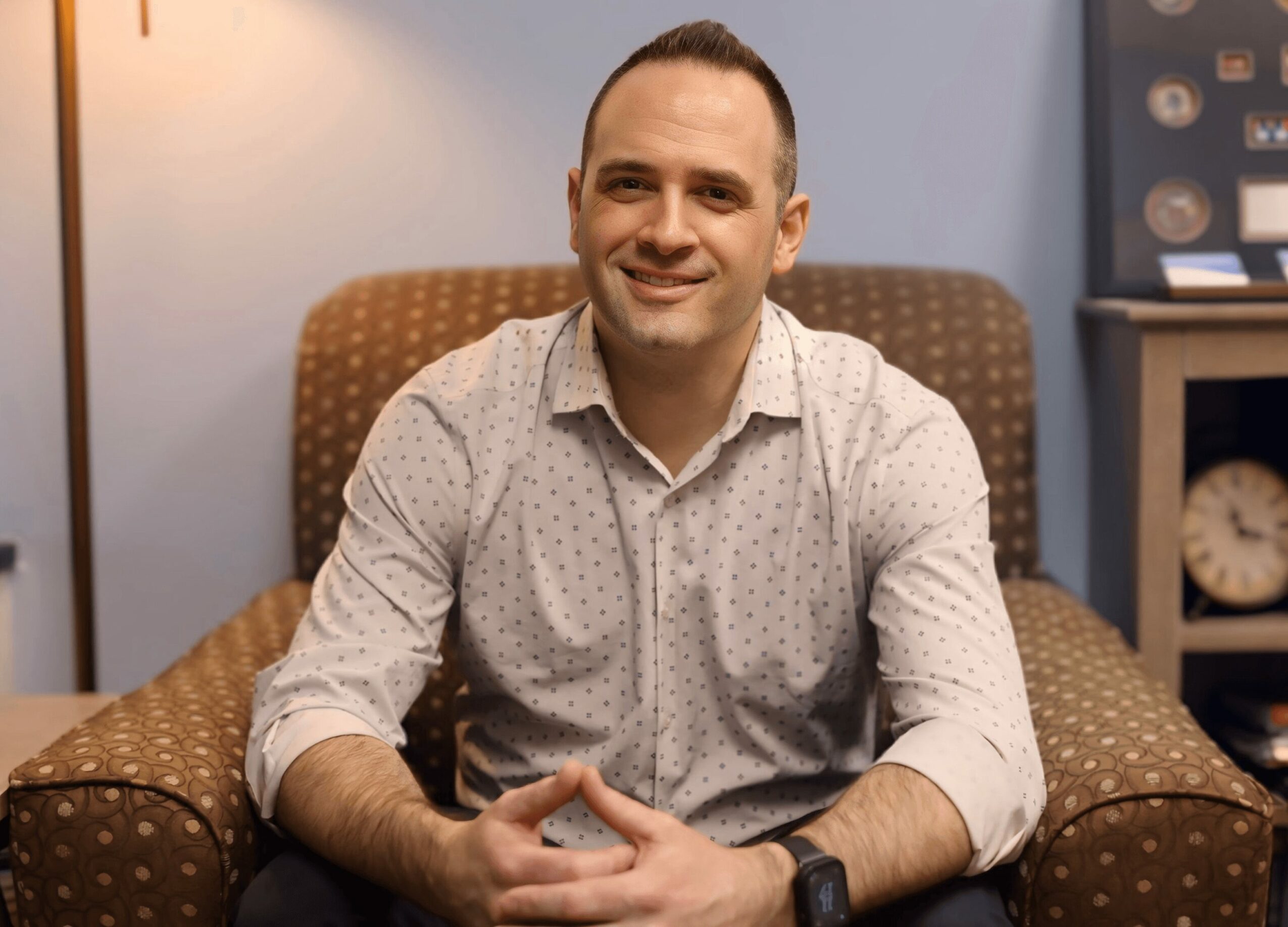
Today we’d like to introduce you to Chris Howells.
Hi Chris, so excited to have you with us today. What can you tell us about your story?
My journey started with a general interest in helping others through service opportunities, in addition to having experiences along the way that gradually sparked a deeper passion for the mental health field. Early community engagement ultimately became the foundation for my path toward becoming a clinical psychologist. Between weekends spent completing my Eagle Scout project or selling Boy Scout pancake breakfast tickets, and a summer volunteering with the American Red Cross, I became certain that whatever I pursued later in life, I wanted to make a meaningful impact on others.
After high school, I attended Bates College in Maine, where I earned a Bachelor’s degree in Psychology. One of the things that drew me to the school was its emphasis on inclusion, community, and environmental engagement. At its core, Bates challenges its students to make a difference, regardless of the path they choose. My time there pushed me to better understand myself theoretically and practically. The first time I played the guitar and practiced a martial art was at Bates. It was also my first opportunity to see mental health care at work – during my senior year, I volunteered at an at-risk children’s group home.
Leaving Bates, equipped with a basic understanding of psychology and human behavior, and the certainty that I was on the right path professionally, I took a job as a case manager at a small nonprofit agency that served individuals with severe and persistent mental illness. I helped clients overcome challenges such as poor motivation and distractibility so they could get much-needed medical care or maintain an apartment. I also helped coordinate social services with other agencies, and even ran support groups. From the experiences and struggles I saw in clients there, as well as in people within my own personal life who had challenges with their mental health, what I wanted to do, what I was most passionate about, and how I could make a difference was clear. Importantly, I understood that my path would be specific to me.
I earned a Master of Arts Degree (M.A.) in Psychology (2008) and a Psy.D. in Clinical Psychology (2012) from Pepperdine University, completing training rotations at Pepperdine’s community counseling clinic, in a county inpatient psychiatric hospital, and with the Department of Veterans Affairs. I commissioned onto active duty in the United States Air Force while still in graduate school and finished my training at the Wilford Hall Ambulatory Surgical Center (WHASC) at Lackland Air Force Base. The central principles of Pepperdine’s “Purpose, Service, and Leadership” mission and the Air Force’s core values of “Service Before Self” and “Excellence in All We Do” inspired me in my work and strengthened my passion for serving others. On active duty, I provided psychotherapy and other mental health services to service members and their dependent spouses, and had the chance to broaden my reach as the Director of Psychological Health, the Disaster Mental Health Team Chief, and the Suicide Prevention Manager at Kadena Air Base in Okinawa, Japan.
After leaving active duty, I returned to San Antonio and worked for seven years in the Army’s Outpatient and Intensive Outpatient Behavioral Health clinics at Fort Sam Houston. I also spent some time conducting mental health evaluations as part of the Department of Defense’s program to assess medical readiness of its General Officers.
In early 2022, I left federal employment and launched my private practice No Limits Psychological Services, PLLC. From the first time I was stationed here, I loved San Antonio’s strong sense of community, and how the city simultaneously is able to celebrate tradition, local culture, and the arts, while welcoming differences and embracing change as people from all over the world and all walks of life come together. Celebrating the notion that our differences make us stronger as a community is a priority in my personal and professional life. At its heart, I wanted my practice to reflect this blend of “small town” life and “big city” living, which I do by ensuring I cultivate strong therapeutic relationships, choosing an office location that is accessible for in-person appointments, and offering virtual appointments to residents of Texas and beyond.
Alright, so let’s dig a little deeper into the story – has it been an easy path overall and if not, what were the challenges you’ve had to overcome?
They say that to do anything meaningful “takes a village.” I’ve been quite fortunate to be surrounded by some incredible people during my mental health career journey, without whom I never would have gotten where I am today. Because of those around me who showed up when I needed them the most, the challenges I’ve had along the way have pushed me to where I am currently rather than knocked me off the path altogether.
I remember sitting in one of my undergraduate psychology classes during my senior year and imagining life after graduation, wondering what type of first “psychology job” would be the best to see if working in psychology was as interesting and rewarding as studying it. Just a few months later, I learned I would be graduating at a time when the economy was struggling significantly and that “Master’s grads are taking the Bachelor’s level jobs.” At the time, and at several other points over the next couple of years, I applied to any type of position I could find (including many outside the psychology field) where they were looking for someone with a degree in Psychology “or another related field.” I wasn’t afraid of working in the meantime, but each rejection, written or silent, made me wonder if I was just too stubborn to see that psychology wasn’t for me. Over the years since, I’ve lost sleep, shed tears, and asked myself the same questions as I met different challenges along the way.
As it turns out, each and every setback put me on the exact path I needed to be on. Having no jobs leads for nearly three years and being rejected after the only interview I received (which I thought I had nailed), freed me up to get a job as a Psychology administrative assistant at Pepperdine’s Graduate School of Education and Psychology. This connection renewed my resolve to work in the field of psychology, and led to all of the department faculty (and the Dean) knowing me at a level beyond what could be determined in the admissions interview I had later on, which likely contributed heavily to my admission to both the master’s and doctoral programs at Pepperdine. The thank-you note I wrote after the initial rejection became the catalyst for a phone call on my birthday to offer me the case manager job I initially didn’t get. The resilience I built during the years when I couldn’t see a pathway for returning to the field of psychology prepared me immensely for the challenges I later faced towards the end of my doctoral program and first year of marriage, active duty, and parenthood. Difficulties with juggling the rigorous demands of Air Force training, rushing across town to see my baby daughter (born seven weeks early and getting care in the NICU), and completing my dissertation during my “free time” helped me forge connections with two supervisors who were instrumental in obtaining my next two jobs. The struggles I had working (at different times) for two emotionally volatile and impulsive bosses gave me the confidence I needed to make the leap to start my own practice. Fortunately, I’ve learned to better trust myself and remember that I have others in my life who can help me see the struggles differently and carry the weight with me.
Great, so let’s talk business. Can you tell our readers more about what you do and what you think sets you apart from others?
No Limits Psychological Services, PLLC is a small group private psychotherapy practice (currently two clinical psychologists) that specializes in working with adolescents and adults struggling with a variety of psychological, trauma-based, identity, and life transition difficulties. Central in everything we do is making sure the care we provide fits for the specific person coming to see us—are we the right fit for you? We also want you to feel respected and heard in the process, and we want therapy to be effective on your terms. Reducing distress and symptom impact is critical, but we also understand that it is essential that therapy is transformative in nature for you. When therapy ends, our hope is that you leave with a sense of empowerment, and that resolving problems (or facing things that are not resolvable) replaces coping with them as much as possible. The name of the practice derives from the beliefs that there are no limits to what you can accomplish when you move beyond surviving and that there are no limits to our commitment to helping you achieve your goals.
I work with adults who struggle with a variety of difficulties that include treatment-resistant depression, medically unexplained symptoms, the lasting effects of trauma, and professional identity and relationship struggles. I am an Air Force Veteran, and I have trained in a variety of treatment approaches and within a number of military and non-military medical settings. These experiences have been central to the work I do, as I specialize in helping those who haven’t benefitted from past therapy. I’ve practiced in a wide array of settings with a variety of people struggling in different ways. In the end, though, I genuinely want to better understand the struggles of the people I see so that I can work with them to create a wellness roadmap that is unique to them. How can someone feel better in therapy if they don’t feel understood during the process? I’m also one of only a handful of therapists in Texas who are trained in the Intensive Short-Term Dynamic Psychotherapy (ISTDP) model of treatment. At its core, ISTDP is about integrating what works in therapy, and working to provide maximum relief of suffering as quickly as possible to the person in the therapy room. Each therapy is unique, and every session is about helping to empower the person in treatment through the experience of the therapy itself – to go from managing life to thriving in it.
Since San Antonio is a city in which family is of the highest importance, my practice also employs an adolescent and young adult clinical psychologist, who is a certified trauma specialist. She too has extensive clinical training and experience in a range of embedded medical, outpatient, and forensic settings. She also has the unique perspective of being a military child, a military and Veteran spouse, and having been a clinician within the military medical system. And whether she is working with children of service members and Veterans, or high schoolers from San Antonio who are leaving for college, her affirming approach aims to make sure no aspect of someone’s cultural or identity experience is discounted in the care they receive.
Fundamentally, our aim is to make sure who you are, what you want, and where you want to go aren’t lost in the treatment process. Jackie Robinson famously said, “A life is not important except in the impact it has on other lives.” We aspire to live up to these words and the legacy behind it.
Before we let you go, we’ve got to ask if you have any advice for those who are just starting out?
Absolutely! As mentioned earlier, I first started working in the mental health field as a case manager at a small non-profit agency that worked with individuals with severe and persistent mental illness. As someone with a Bachelor’s degree filling a role typically intended for a Master’s-level employee, I remember feeling so grateful to be trusted by so many people (e.g., clients, co-workers, supervisors, people from other agencies) with such an important position. It was a fantastic job, and it decidedly opened the door for my career in mental health. I also remember that for the first six months I was so self-conscious that it frequently was hard for me to even share what I was thinking. I fumbled over my words, and I was so unsure about what I was doing that I often wondered if I’d be discovered as the imposter I thought I might be.
Fortunately, because of the support and experiences with great supervisors and colleagues there, over time I was able to understand the value they saw in me and why I’d been hired and entrusted with the role in the first place. It wasn’t because they expected me to know all kinds of unique and advanced clinical interventions. I was hired because I was passionate about the work, curious about and open to learning, and conscientious about making sure I was always working to hear what others were saying. As I settled into accepting the gaps in my training and knowledge, ironically, I started to feel more comfortable and confident in myself. I wish, though, I had known back then that I didn’t need to have everything figured out, and that showing up, pushing myself to grow, listening with an interested ear, and that getting used to feeling a bit uncertain and doing something anyway would set the stage for everything else professionally and personally.
So, my advice would be to remember that you earned your seat at the table and have something to offer. Be humble and honest about what you don’t know, and be curious about discovering the answers. Challenge yourself to be “okay” with uncertainty, while seeking out guidance from experts. Lastly, stay true to your passions and personality because your unique experiences make a big difference.
Contact Info:
- Website: https://nolimitspsychologicalservices.com/
- LinkedIn: https://www.linkedin.com/in/chrishowellspsyd/