



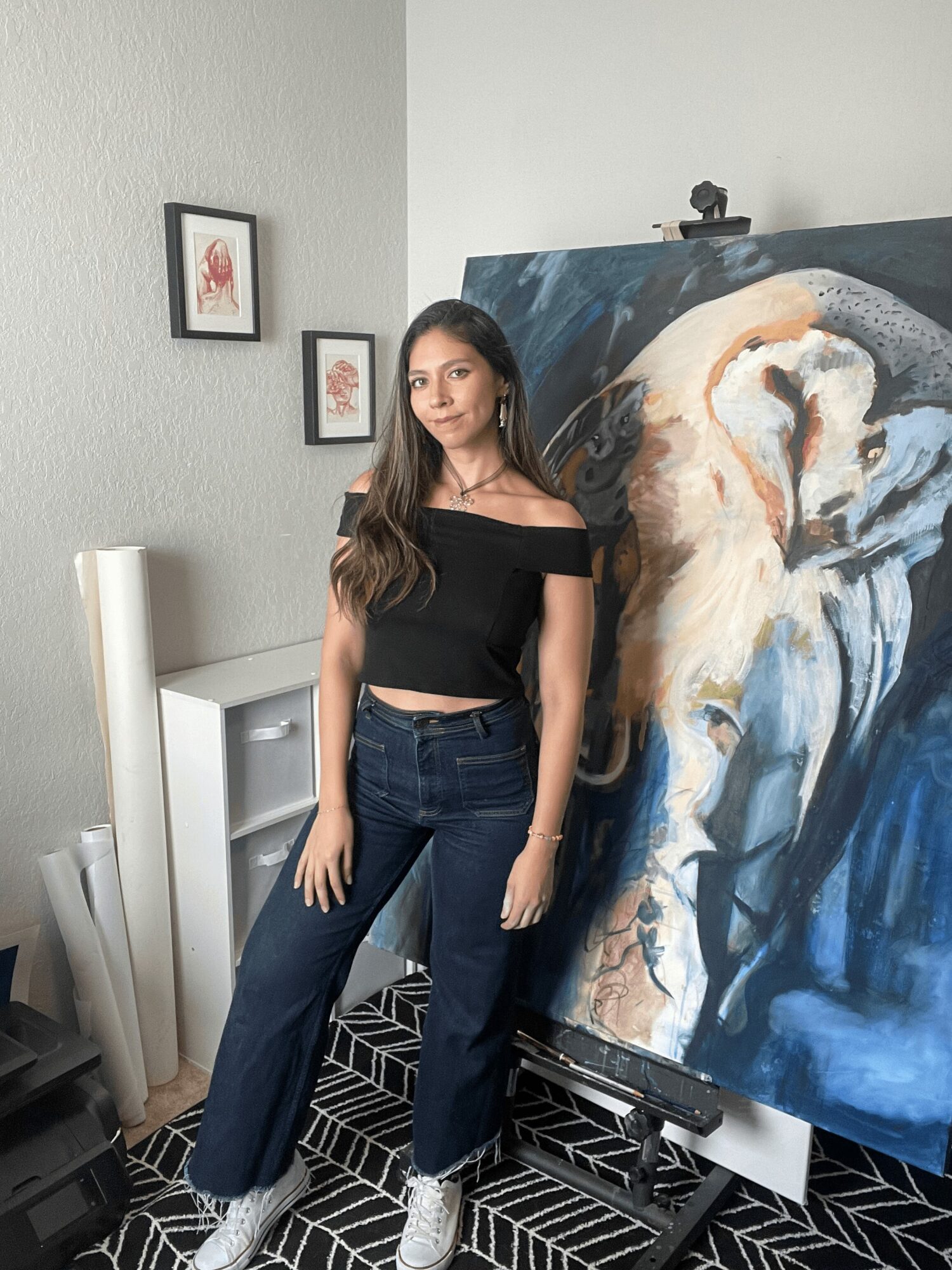
Today we’d like to introduce you to Paulina Escobar Cotera.
Hi Paulina, so excited to have you on the platform. So before we get into questions about your work-life, maybe you can bring our readers up to speed on your story and how you got to where you are today?
Art has been a part of my life for as long as I can remember. Growing up in Mexico, I had my first exhibition with a painting of a turtle, and looking back, I realize I was always drawn to drawing and painting—especially animals. After moving to the U.S., my first exhibition here was in middle school, where I exhibited a painting of a lion. Those early experiences made me realize how naturally art was becoming part of my identity.
When I started university, I wasn’t completely sure what career path I wanted to pursue, but art was the one thing I consistently felt connected to. That led me to study Fine Arts at The University of Texas at San Antonio, where I also completed a Bachelor’s degree in Art History. Studying both studio art and art history helped me develop not only my technical skills, but also a deeper understanding of visual storytelling and artistic traditions.
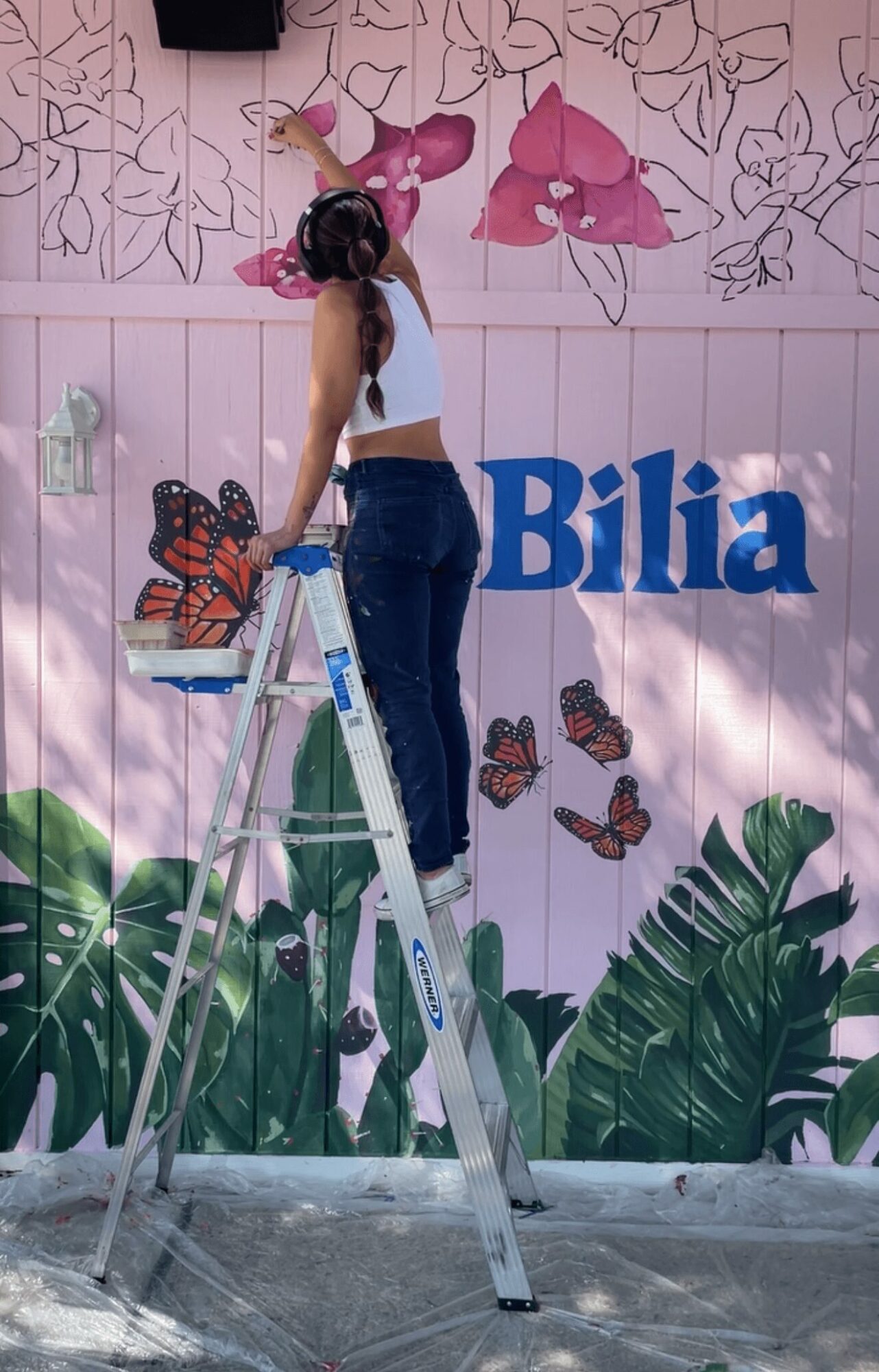
Over time, I realized that art kept calling me back no matter what else I was doing. Maintaining a consistent art practice hasn’t always been easy, especially while working full-time, but I’ve always made space for it because creating feels essential to who I am. I started taking commissions here and there, and in 2024 I received my first major mural commission from Bilia Eatery, a local restaurant in Castle Hills. That project gave me the confidence to pursue larger public and commercial work.
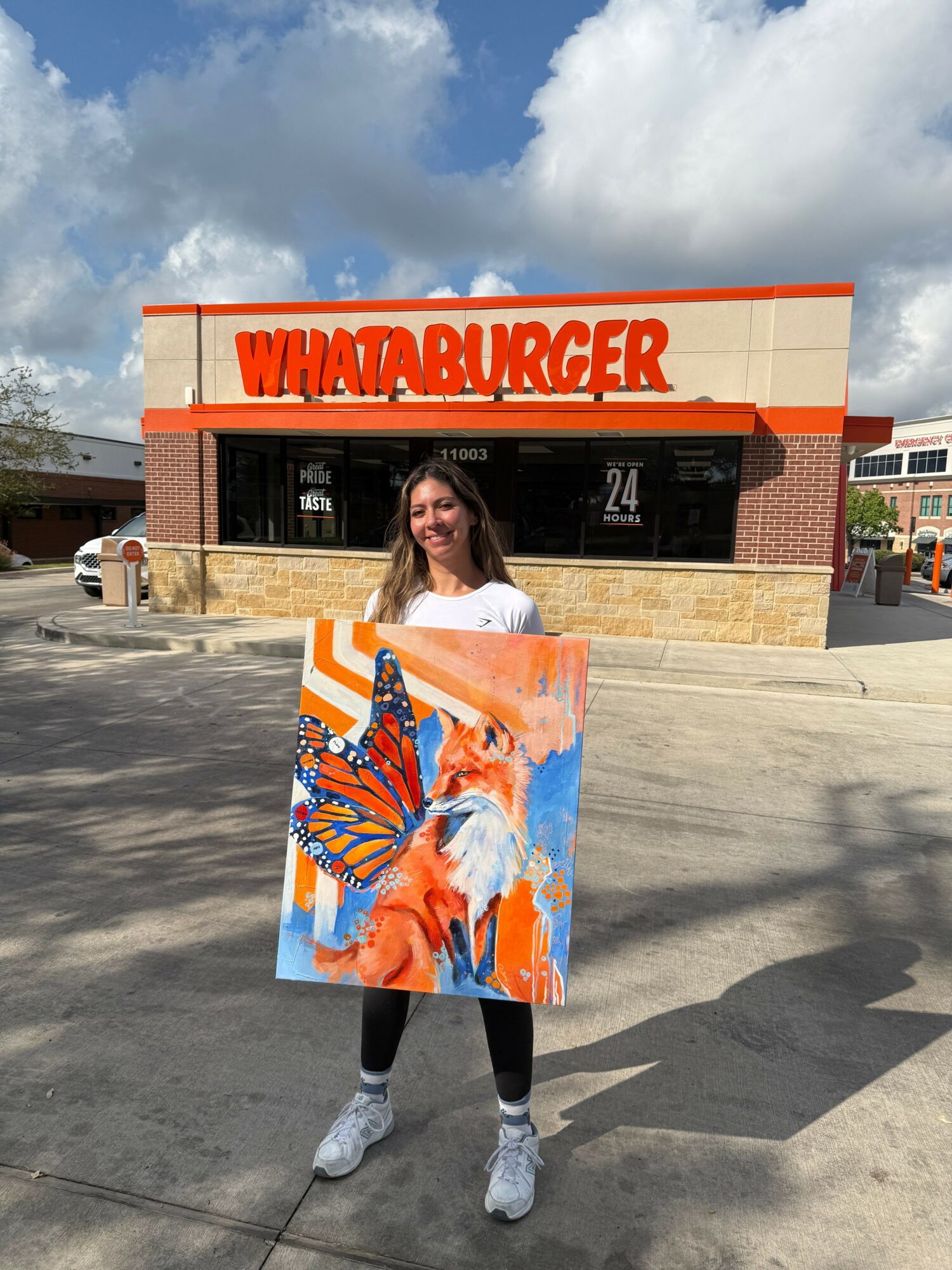
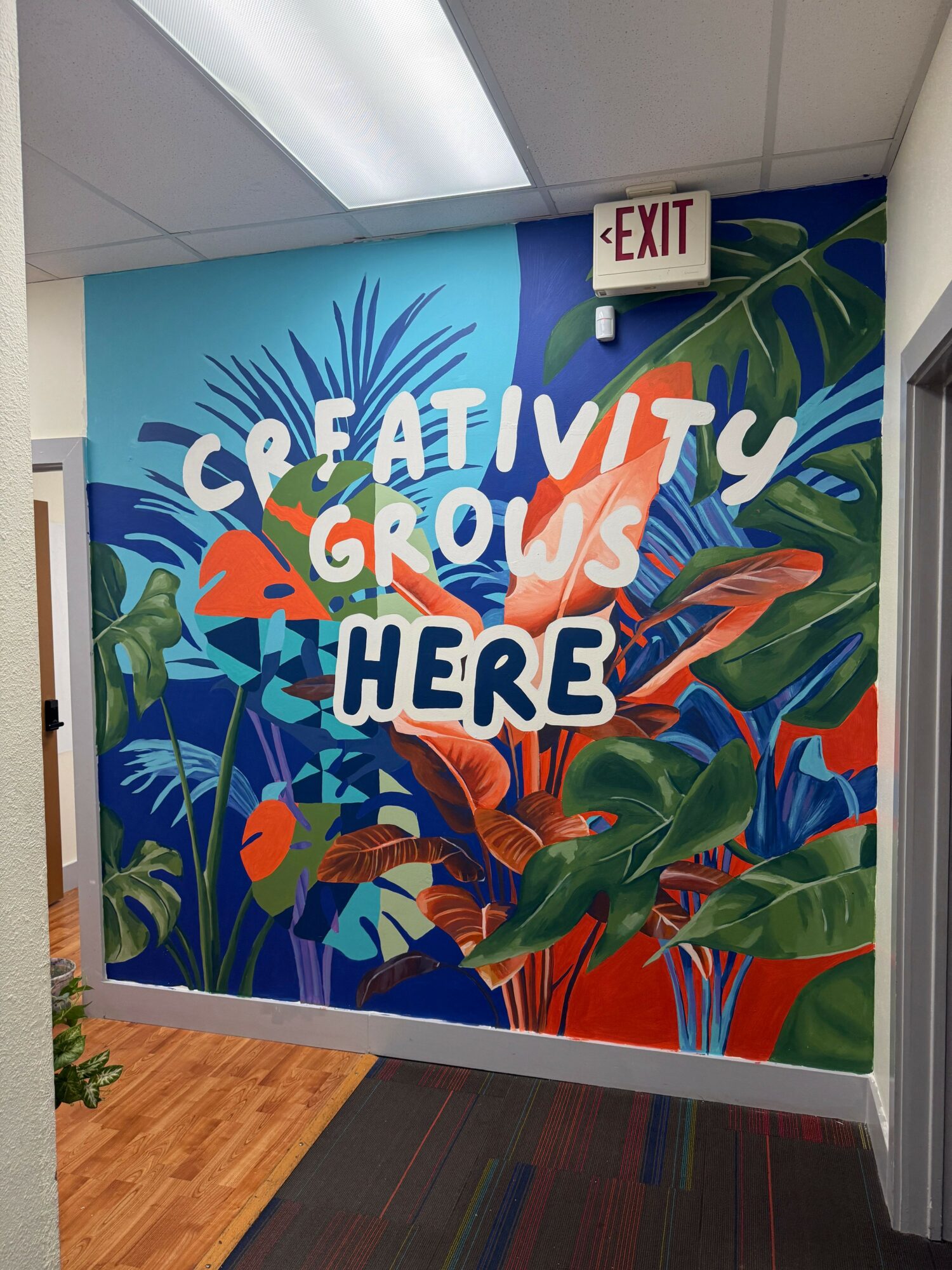
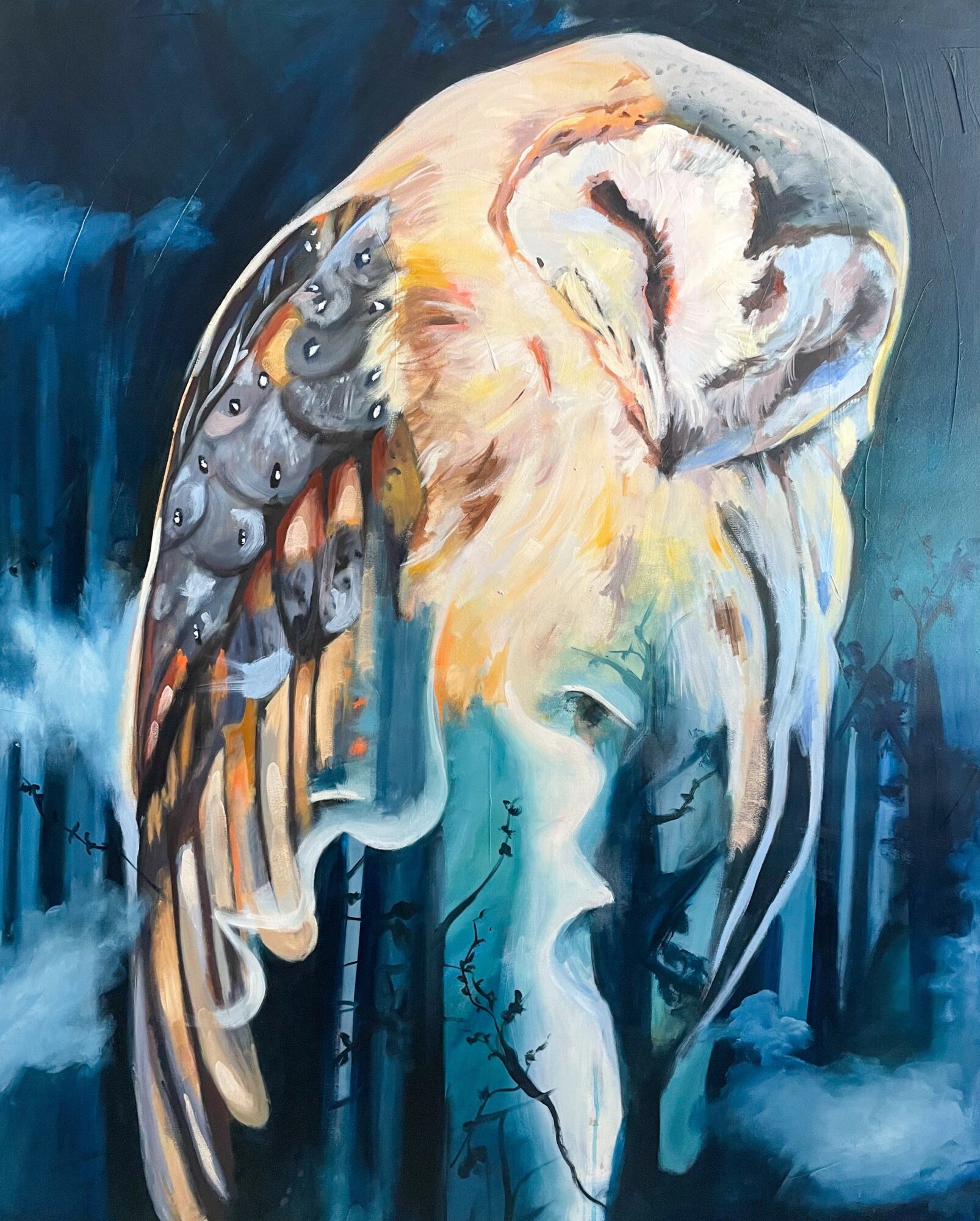
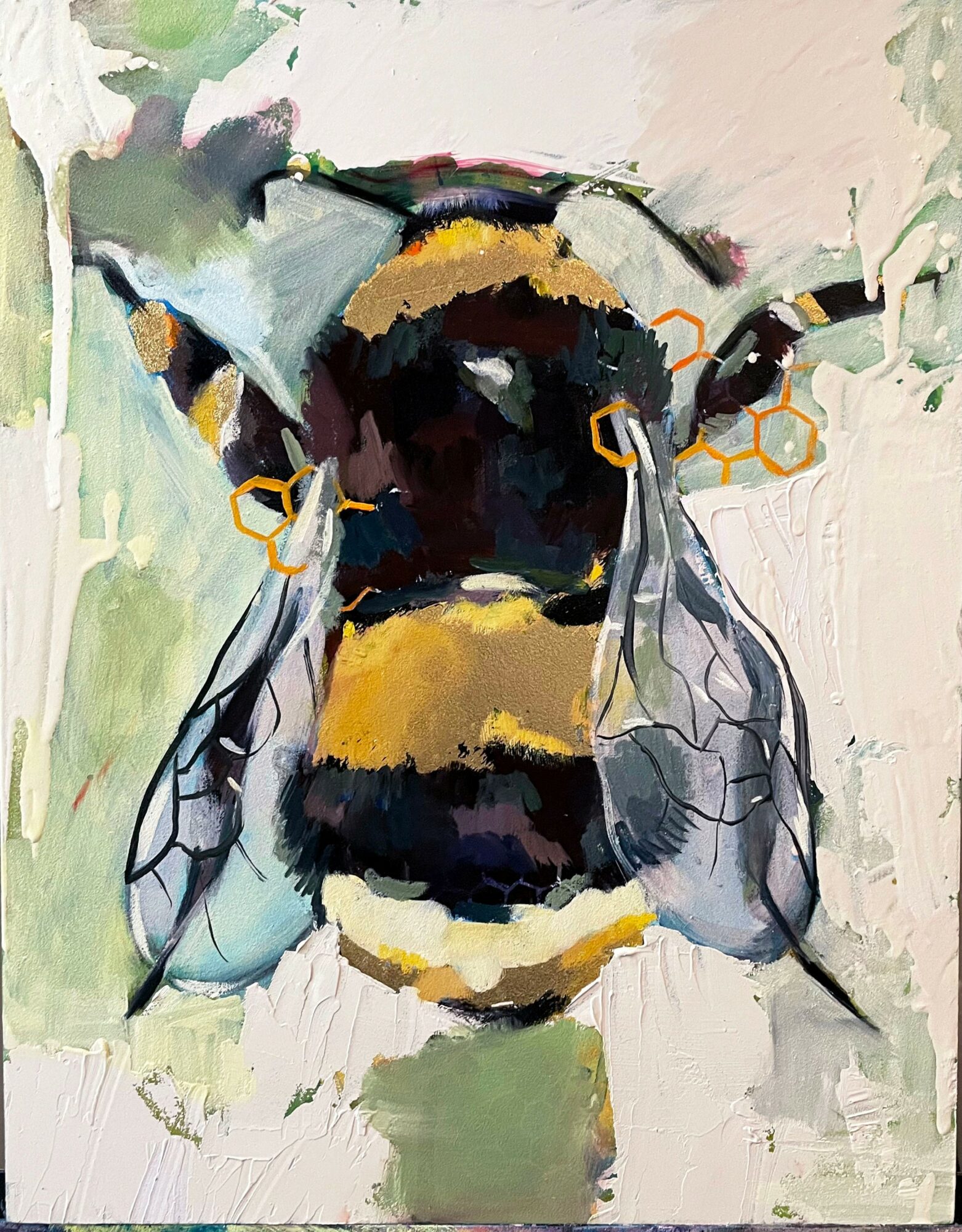
Today, I create mixed media paintings using acrylic and oil on canvas, and I also design murals for businesses and community spaces. Last year, I had the opportunity to create a painting for Whataburger, which is now displayed in their museum in Austin. I’ve also completed murals for office spaces and small businesses, and I’m excited to continue growing both my studio practice and my public art work.
Can you talk to us a bit about the challenges and lessons you’ve learned along the way. Looking back would you say it’s been easy or smooth in retrospect?
Honestly, it’s never felt like a completely smooth road. I think there’s a common idea that artists are just naturally inspired and everything comes together in an epiphany moment, but in reality it’s much more like any other skill—it takes practice, discipline, and consistency over time.
One of my biggest challenges has been staying consistent with my creative practice, especially while balancing work and other responsibilities. I’ve learned that inspiration doesn’t just appear—you have to show up for it everyday. Over time, I’ve come to really value those moments when I make space to create, because it’s not only important for my work, it’s also something that feels grounding and therapeutic for me. And when I step away from it for too long, I can definitely feel the difference in my mindset and energy.
Something I’m also recently learning is that, in the age of social media, it can be difficult to quiet the noise. While it’s meaningful to share your work with your community and friends, there’s also something important about creating just for yourself—without the expectation of feedback, validation, or financial outcome. I think protecting that space has become an important part of my process.
At the same time, every project comes with its own set of challenges. Whether it’s figuring out how to translate a design onto a large wall or working around architectural constraints, there’s always problem-solving involved. But I’ve come to see that as a natural part of the process. In a way, being an artist is also being a problem solver—each obstacle pushes you to think differently and find creative solutions.
So while the path hasn’t always been easy or linear, those challenges have really shaped how I work and helped me grow both artistically and personally.
Can you tell our readers more about what you do and what you think sets you apart from others?
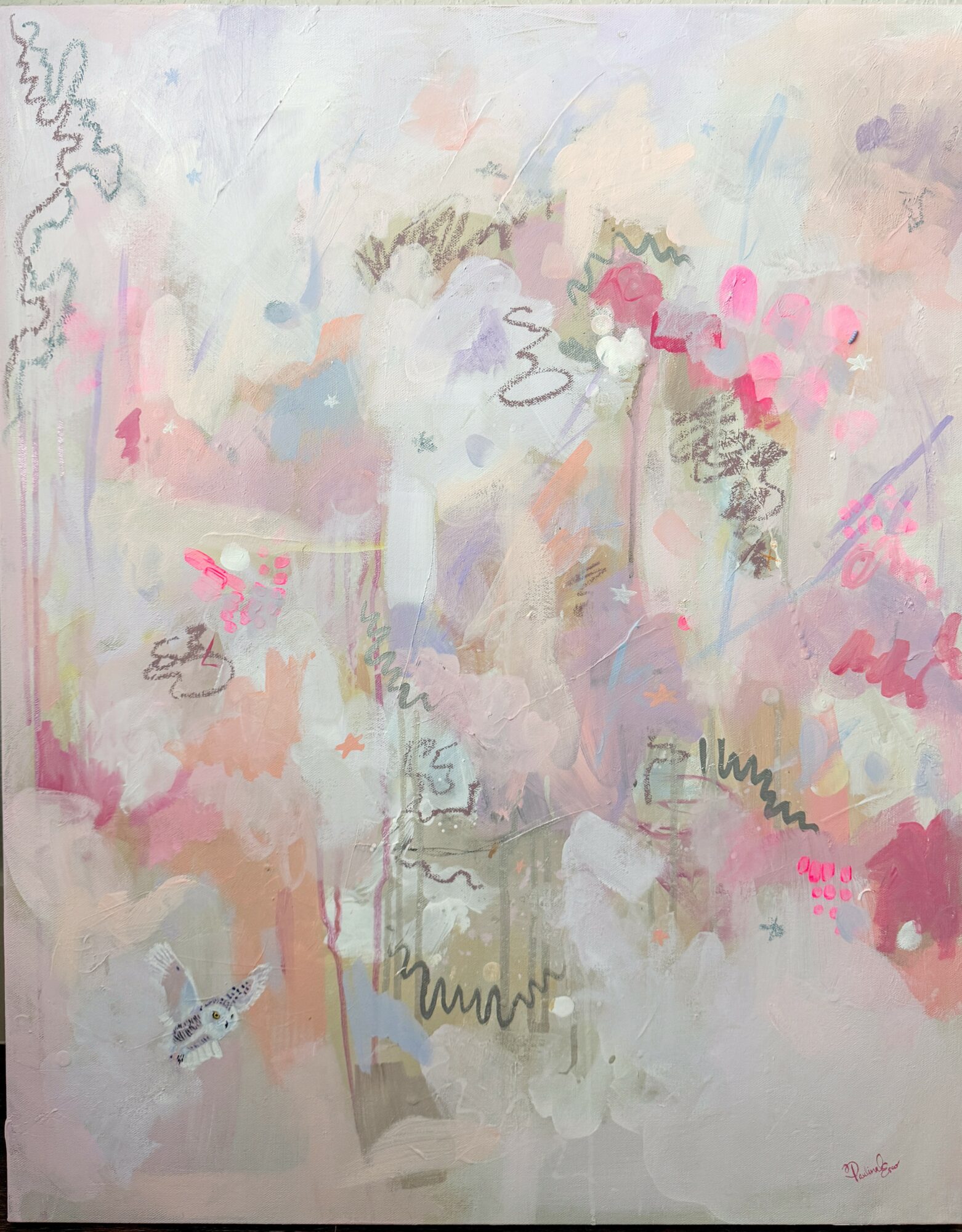
I’m a visual artist working primarily in mixed media and oil painting, and I also create large-scale murals for businesses and community spaces. My studio work has traditionally focused on animals, which are a recurring subject in my practice, but more recently I’ve been exploring more abstract approaches as well, especially around emotion, movement, and symbolism.
In terms of recent work I’m most proud of, my mural projects over the past couple of years have been especially meaningful because they’ve pushed me technically and helped me grow in scale and confidence. In 2024, I completed a mural for Bilia Eatery, and more recently I created a mural for VenturePoint, an office space in San Antonio. Both projects challenged me in different ways, from design translation to working within architectural spaces, and they really shaped my approach to public art.
I’m also very proud that one of my paintings was included in the Whataburger art collection in 2025, which is currently displayed in their museum in Austin. That was a meaningful milestone for me because it felt like recognition of my work on a larger platform.
As for what sets me apart, I don’t always think about it in strict terms, but I would say my work is very rooted in emotion, symbolism, and connection. I’m interested in creating pieces that people don’t just look at, but actually engage with—where they find their own meaning or interpretation within the work. I also really value when viewers pick up on symbolic elements, sometimes in ways I didn’t even explicitly explain, because that creates a shared experience between the artwork and the audience.
At the core, painting is just something that feels very natural and important to me. I’m always trying to communicate feeling and ideas in a visual way, and I think that intention to connect—both personally and with others—is what drives my work the most.
What sort of changes are you expecting over the next 5-10 years?
In the next 5–10 years, I think the art world will continue shifting away from traditional gatekeeping structures, especially the reliance on galleries as the primary way for artists to build careers. That model is still important, but it’s becoming less exclusive as social media and digital platforms give artists more direct access to audiences and collectors.
One of the biggest changes I already see happening is that artists have more autonomy than ever before. It’s now much easier to share work, build a following, and develop direct relationships with people who are interested in collecting art, without necessarily needing traditional institutional connections first. In that sense, the path for artists feels more open and self-directed.
At the same time, that accessibility comes with its own challenge—there is so much content and so much artwork being shared constantly that it can be easy for individual voices to get lost in the volume. So I think visibility and authenticity will become even more important in the future.
Another shift I find interesting is how much more personal the relationship between artists and collectors can be now. Because of social media and direct communication, collectors can sometimes follow the process more closely and feel more connected to the work as it develops, not just as a finished product. That can make the experience of collecting art feel more personal and collaborative than it may have been in the past.
Overall, I see the industry becoming more independent and direct, but also more competitive in terms of attention—which makes clarity of voice and genuine connection even more important for artists moving forward.
Contact Info:
- Website: https://www.paulinaesco.com/
- Instagram: https://www.instagram.com/paulinaesco/
- Facebook: https://www.facebook.com/PaulinaEscobarArt