





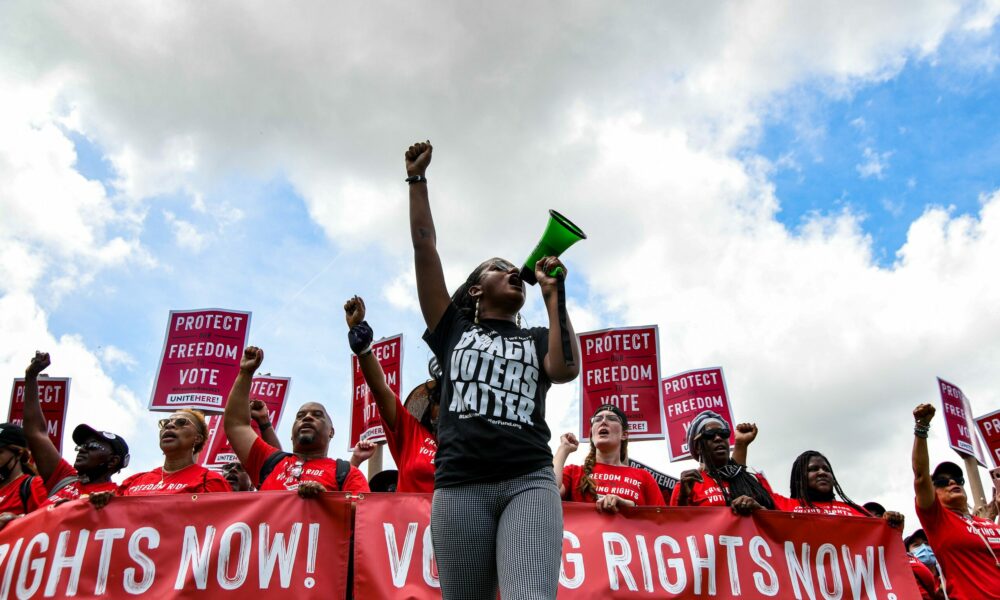
Today we’d like to introduce you to Kimiya Factory.
Hi Kimiya, can you start by introducing yourself? We’d love to learn more about how you got to where you are today?
I am from Austin, Texas, and came to San Antonio for undergrad to study Political Science at The University of Texas at San Antonio. While attending UTSA, I dove into the world of Black Feminist and Afrofuturist Literature through my research as a National CX Policy Debator on UTSA’s Debate Team. It was through keeping my nose in liberatory text and pursuing investigative news journalism as the Assistant Editor of UTSA’s Independent School News Paper – The Paisano – that my quest to #ChangeRapeCulture began. I was disgusted at the casual nature and conversation about rape on my college campus.
There were clear gaps and inconsistencies with the campus’ Title IX as survivors of rape on campus confided in me left and right about the injustices they faced after reporting rapes on campus. Soon enough myself and a group of Womxn wrote a manifesto – calling out the rape culture present on campus, and a call-to-action to carve out a safe space for survivors – and the movement #ChangeRapeCulture was born. I actively protested and challenged institutions around the city since then, through research, presentations, and facilitating workshops/training about the way that rape culture functions in our society. With organizational chapters in both Pennsylvania and Texas, the scope of #ChangeRapeCulture is growing as the need for Abortion Access, Transgender Inclusion and accurate survivor representation are on the rise.
I was called to action after the murder of George Floyd as myself and thousands took to the streets to advocate for Black Lives during the summer of 2020 – through my advocacy for Black Lives in San Antonio Black Freedom Factory was born. I now currently Direct Black Freedom Factory – an organization dedicated to Redefining Professionalism through data-driven activism, communal advocacy, and racial equity throughout San Antonio.
The root of my research, programming, and initiatives are all dedicated to envisioning Afro-Indigenous Futures that address the healing of generational trauma and numerous disparities that BIPOC communities face every day. I hope to be an innovator in a conversation that isn’t content with the status quo of immigration, mass incarceration, the school-to-prison pipeline, and gerrymandering as it exists and functions in society today.
The intersections of all of our identities – LGBTQIA+ and BIPOC Communities – are the very reason that I am who I am today. The individual experiences that I have had the opportunity to understand and love are what define the path that I am on today.
Can you talk to us a bit about the challenges and lessons you’ve learned along the way? Looking back would you say it’s been easy or smooth in retrospect?
To block walk in order to register others to vote, to educate and advocate for communities who can seldom advocate for ourselves being wrapped up in the systemic obstacles that the ‘isms’ create for us. I remember what felt like a rock in my chest as I watched George Floyd beg for his life and lose it on every screen I looked at the entire summer of 2020. It was only the written words of the people before me who faced the same exact struggles – Angela Davis, Saidiya Hartman, W.E.B. Dubois – that I found comfort and validation in my rage to ‘keep on keeping on’
Nonetheless, I would acknowledge that the key to understanding struggle are the intersections of everyone’s privilege and identity, in order to unlock the greater picture of true liberation and freedom.
Can you tell our readers more about what you do and what you think sets you apart from others?
Kimiya Factory serves as the President/Executive Director of Black Freedom Factory – an organization that encourages Data-Driven Activism, #RedefiningProfessionalism, and dismantling racial inequity. She holds true centering accountability at the crux of politics and culture..,,,
I am equally proud of all of the work I do – seeing as my existence faces several odds with the several intersections of my identities. Being Black, Queer and a Womxn. My fight is only a testimony of my ancestors and everything they’ve sacrificed for the life we live in the present and future.
How do you define success?
I define success in the categories of – self-forgiveness, freedom, autonomy, rest, re-distribution of wealth, #LandBack, Afrofutures, Indigenous Futures, and #ChangeRapeCulture.
Contact Info:
- Email: info@blackfreedomfactory.org
- Website: www.blackfreedomfactory.org
- Instagram: https://www.instagram.com/kimiya__denise/
- Facebook: https://www.facebook.com/kimiya.wuvs.watermelon
- Twitter: https://twitter.com/Kimiya_denisee?ref_src=twsrc%5Egoogle%7Ctwcamp%5Eserp%7Ctwgr%5Eauthor


 Image Credits
Bria Woods, Kenny Holston, New York Times, Oscar Moreno, and Brielle Insler