




Today we’d like to introduce you to Jamie Cole.
Hi Jamie, so excited to have you on the platform. So before we get into questions about your work-life, maybe you can bring our readers up to speed on your story and how you got to where you are today?
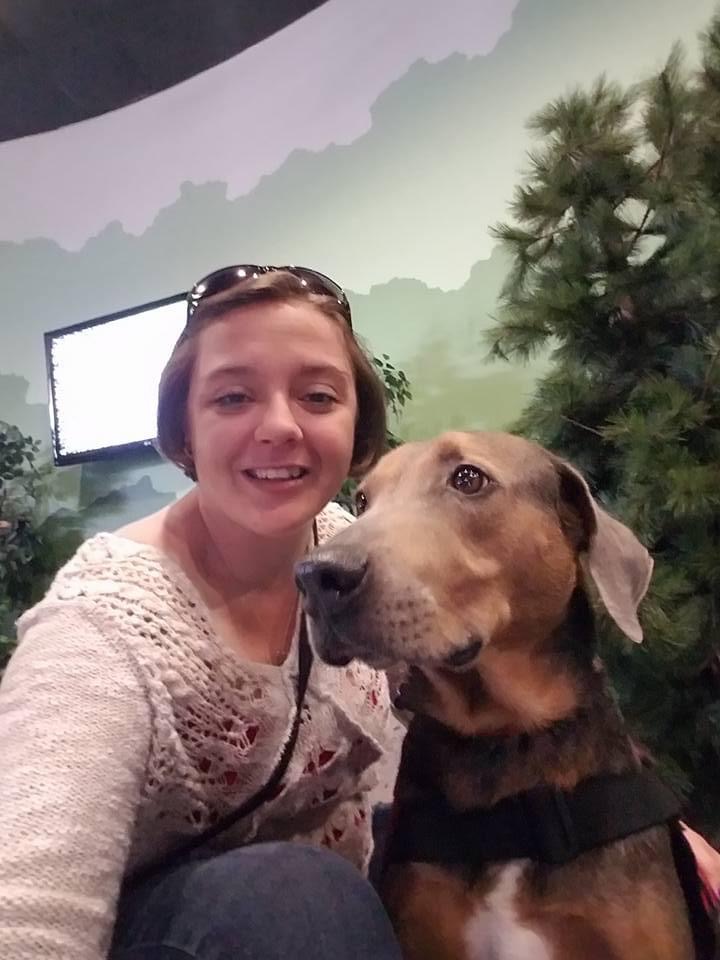
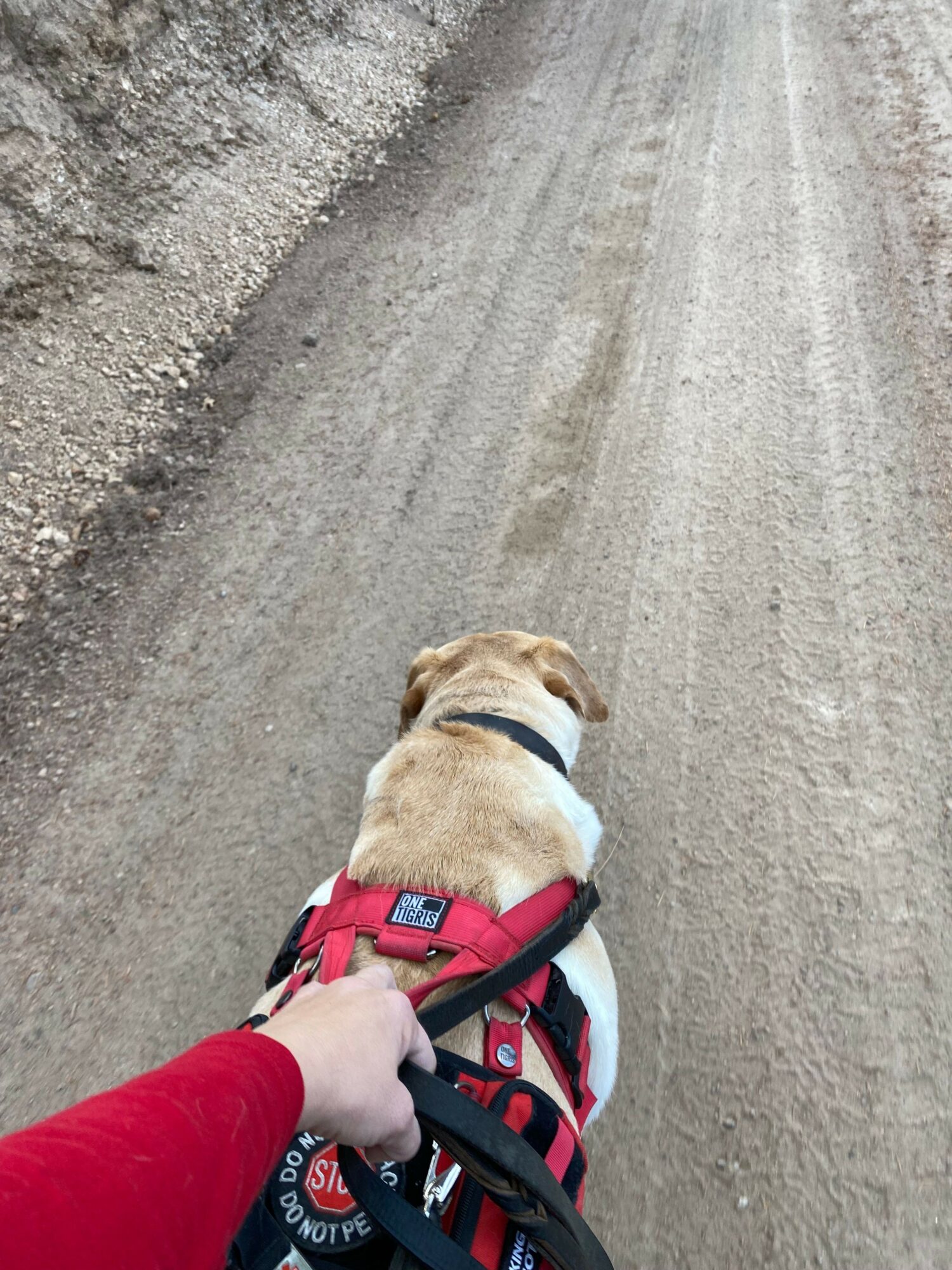
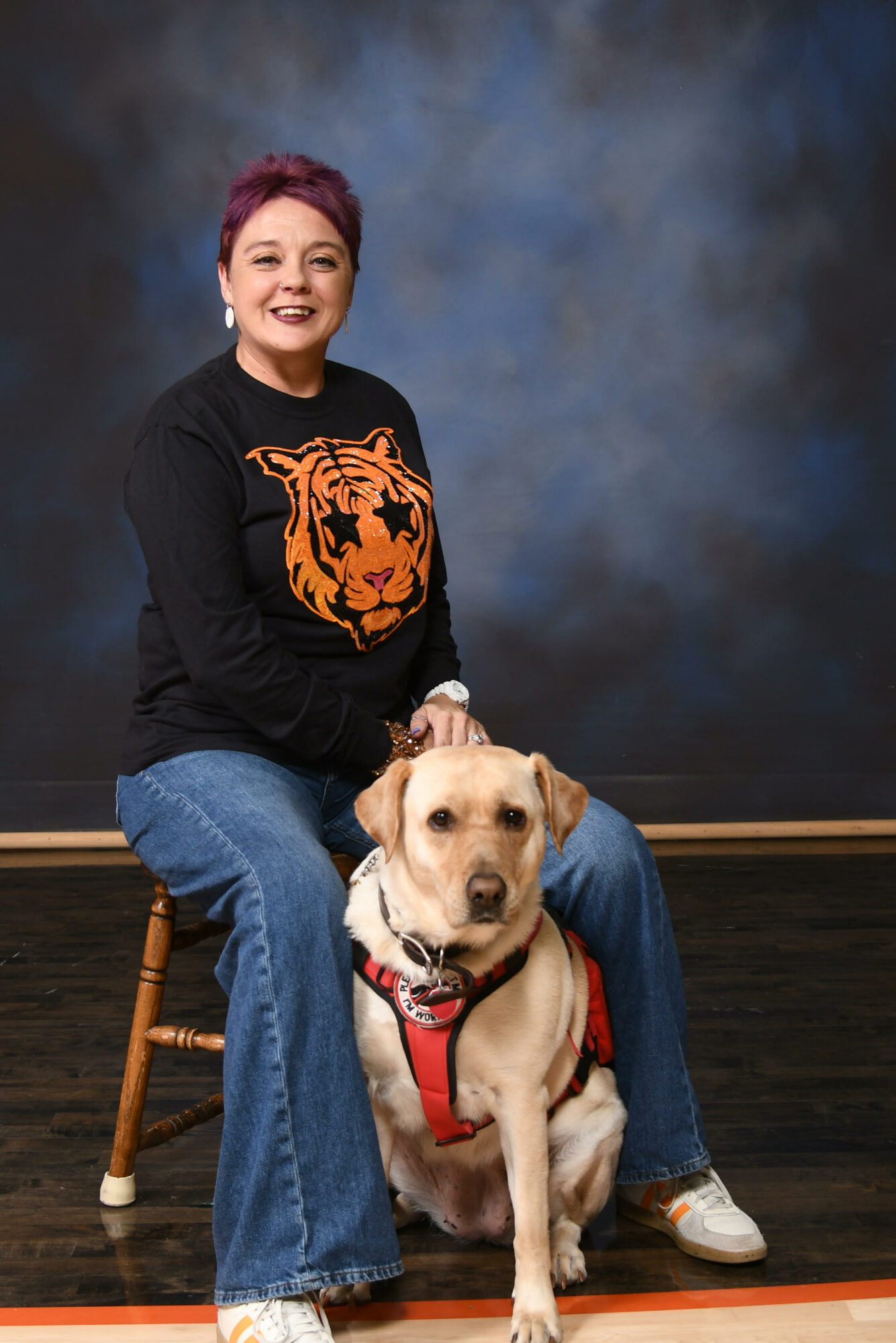
I have been with VADogs of Texas since 2014, when I first applied and they were just getting started as a non-profit organization. I received my first dog, Jake, from them in 2016. Jake and I were a working pair until he had to retire in October of 2021 and I received my second dog, Shay, from them. In July of 2025, I was asked to come on board as the administrative assistant and veteran liaison, as well as being a board member.
I was injured in Afghanistan on deployment (2011-2012). When I returned home, I was placed in the Wounded Warrior Battalion out of Fort Bliss and eventually received a medical retirement after 15 years of service. Going to the VA doctors, they constantly pushed medication after medication. I had already had six major surgeries on my knee. I was suffering from depression, anxiety, nightmares, and could not handle being in public alone. At this point, the VA had me on 21 medications; it wasn’t really living, just functioning in a zombie-like mode. I do not like to admit it, but I was almost just a statistic for veteran suicide. That is how far gone I was before receiving help.
My husband suggested looking into a service dog and we found Veterans Assistance Dogs of Texas. I filled out the application and waited. They trained Jake to my needs as a veteran. When I received Jake, his trainer and I spent several weekends working together, which helped us to be a successful working team.
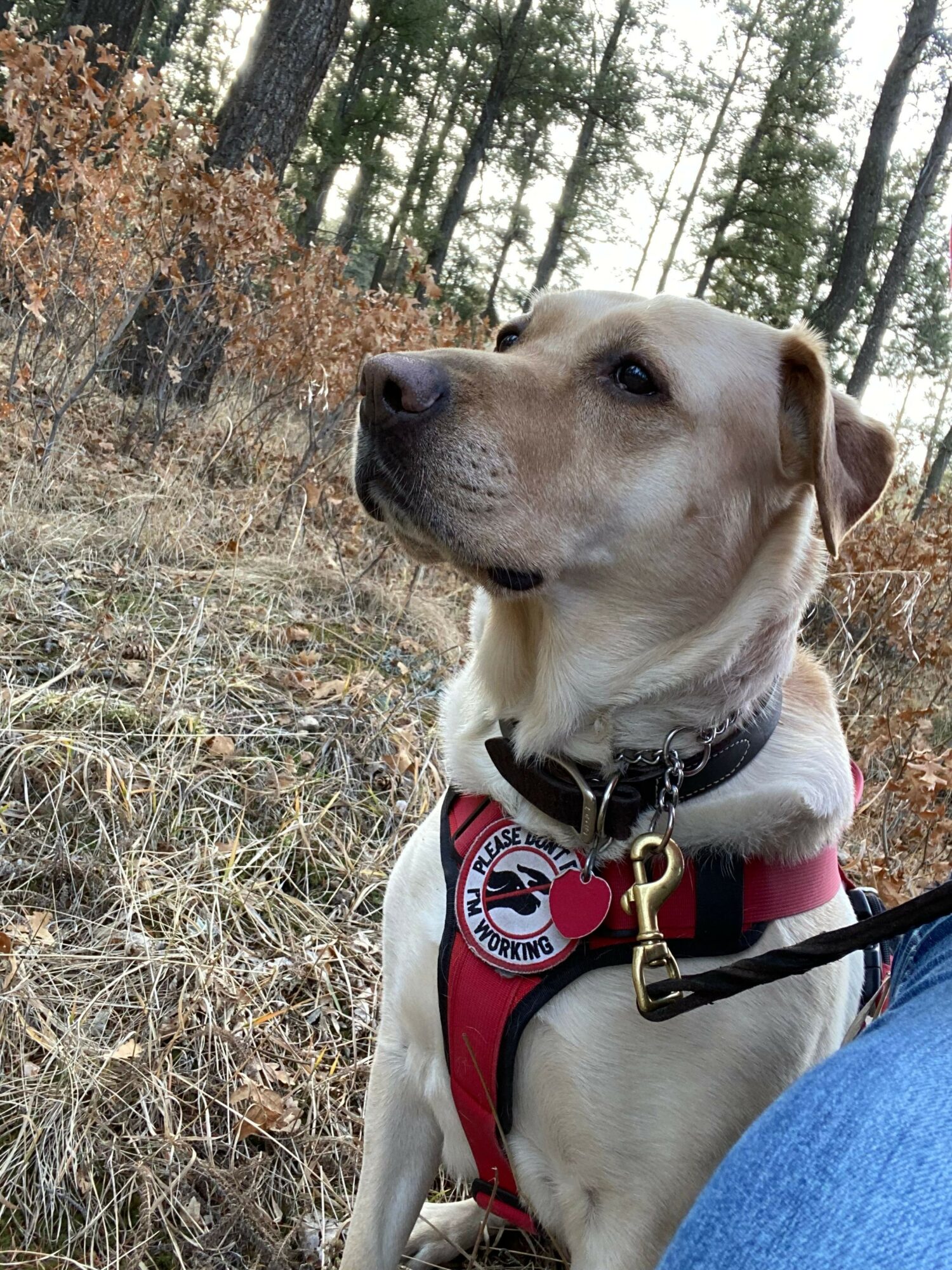
Jake became a key part of my life. Slowly, I started becoming “me” again. I gradually came off the medications. He helped restore my confidence in public outings. He could pull my wheelchair, eventually helped with bracing and mobility, would retrieve items from other rooms for me, and calm me (and often prevent many) debilitating anxiety attacks. By the time he retired, I was down to two medications.
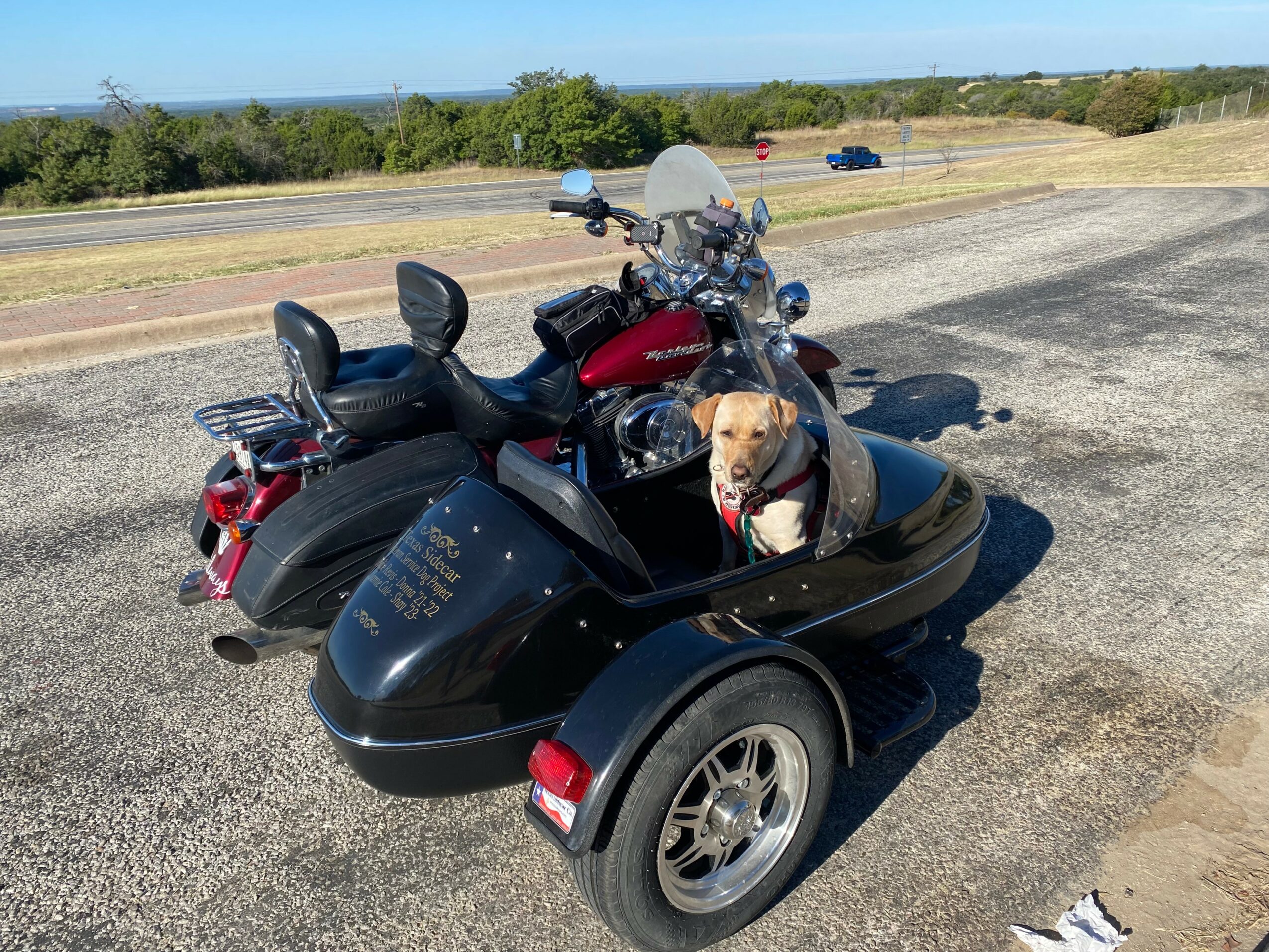
When the organization retired Jake, I was able to receive Shay. She and I have been working together since then and it took a little to get used to a different dog. Shay has a completely different personality than Jake, but one that fits with me. We have shared our story and of what VADogs has done for me, at many events. I do not mind being a spokesperson for this organization because they restored not only quantity of life, but my quality of life. I can never repay them back for that, other than to tell others and share my story so that (possible future) donors will understand the need for veterans that receive a service dog for their organization.
As of today, I no longer take medication for all of the issues I once had. I am a healthier, happier me.
Veterans Assistance (VA) Dogs of Texas is not affiliated with Veterans Administration. They are a non-profit that relies on donations or grants to pay to train these dogs and place them with a veteran. It takes a little over $25,000 to train one dog. As an organization, we try to put out as many dog teams as possible, but can only do so if the funding is available.
I’m sure it wasn’t obstacle-free, but would you say the journey has been fairly smooth so far?
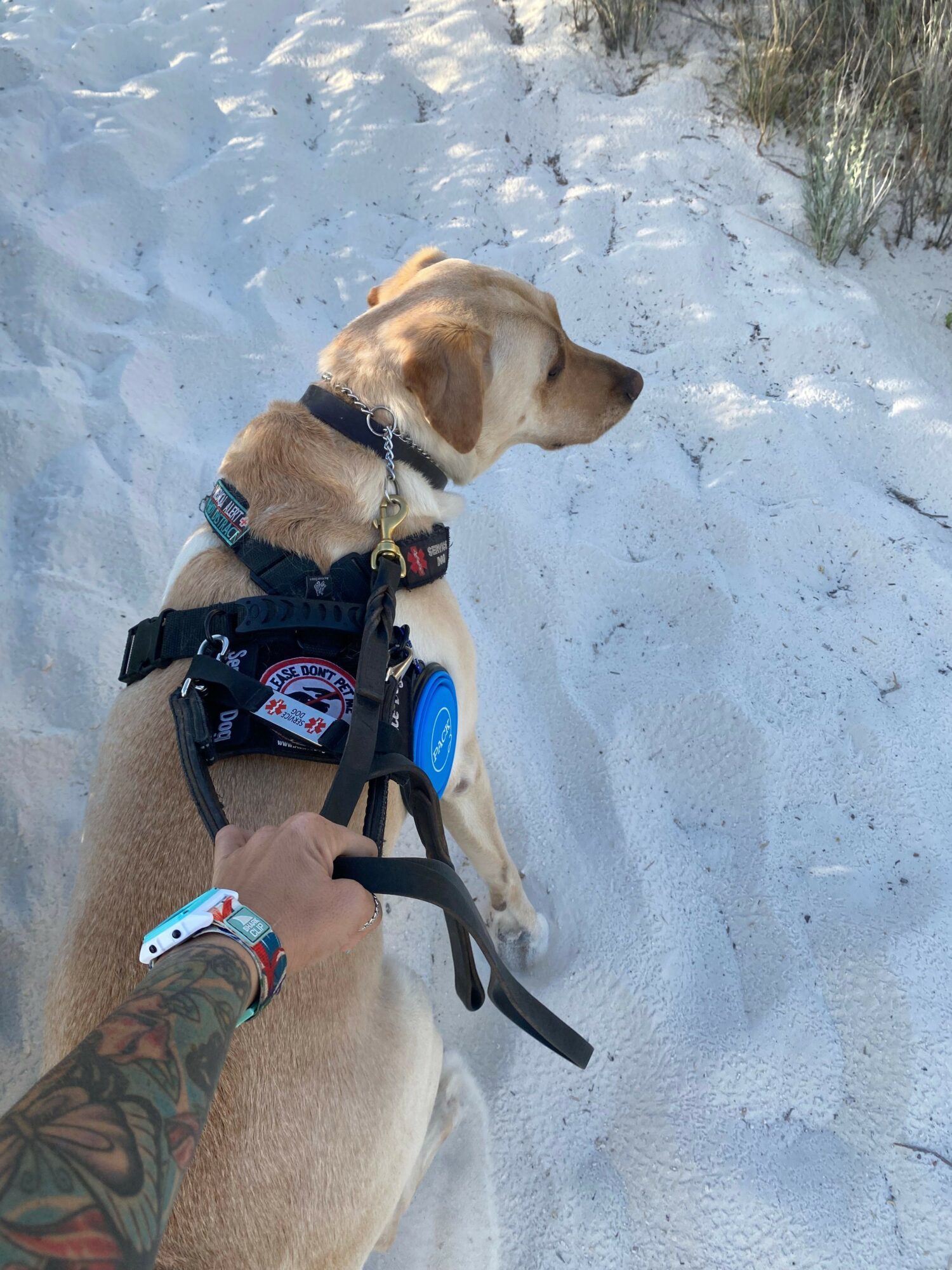
Learning to live a different lifestyle is hard, but worth it. As a recipient of my first service dog, it took some adjusting to how I lived, traveled, worked, and functioned. I had to add time into my schedule to ensure Jake could potty before going into a store, work, or an event. Once the routine was established it was easier. So many people had questions about my service dog. That was probably one of the harder parts. A working service dog is not a pet, but rather a piece of medical equipment. While I was in a wheelchair, or using crutches or a cane, not many people had derogatory remarks about having a service dog. Once I finally was to the point of semi-normalcy, I often had people remark rude things to me because “I didn’t need a service dog because I looked normal”. It was very frustrating.
Sadly, the service dog industry has been bastardized by people buying a vest and slapping it on their dog, even though they do not have a disability. I am 100% disabled and still have a hard time with the right side of my body functioning like it is supposed to. But through rigorous work and the help of Jake and now Shay, I can lead an almost normal life. Shay still goes everywhere with me because I still sometimes fall and need the assistance to get up. I still have to deal with parents telling their kids, “Oh look a dog; go pet it “. I have to ask them not to and then, nine times out of ten, I get yelled or cursed at because I “didn’t let their kid pet my dog”. I become the bad guy in the situation, but I also have to look out for Shay because she is a working dog.
Thanks – so what else should our readers know about your work and what you’re currently focused on?
I currently am the Veteran Liaison and Administrative Assistant for VADogs of Texas. Mostly, it is remotely done. A veteran fills out their application and submits their documents. I process the application. If you do not meet the requirements of our program, I have to send you an ineligible email explaining why. That is the worst part of my job. However, if an applicant is approved, I put them on our master list of veterans and send them an email of how the process works.
We have about 45-50 veterans currently waiting on a dog placement. When Hill Country Dog Center (out of Pipe Creek) gives us dates for classes, I email the veterans in chronological order. Veterans must be able to attend the three weekend classes on order to complete the program and receive their dog. Our Director of Canine Training does a fabulous job of matching dogs to their future veteran. He and I work together to make sure each class is filled to maximum occupancy and then he begins the dog matching process. By the time the veteran gets to the class, they have already met their dog in a meet-n-greet session. The classes help veterans transition and understand how to live and work with their service dog.
As I stated earlier, much of this is done remotely. In the meantime, I am the Master Librarian for Gustine ISD. I also teach a supplemental reading class for a homeschool co-op. I also handle social media for a couple businesses in my hometown, as well as owning my own business.
What were you like growing up?
As a child, I grew up in two small towns. Fluvanna, Texas is a small rural farming community. My mom was a teacher, and my dad was a cotton farmer. I grew up playing outside, going to the public library on Fridays to get books and my sister and I had to agree on a VHS to watch on the weekend. When the bottom dropped out of cotton in the 90’s, we moved to my mom’s hometown of Merkel. My dad went to be a correctional officer and my mom continued to teach.
I wasn’t the best student but maintained mainly an A average. If you couldn’t find me, I was usually in the library or the gym.
I was athletic and loved to run. In high school, I actually joined the National Guard at 17, went to basic between my junior and senior year. Once I graduated high school, I finished my Advanced Individual Training (AIT). I tried the college route, but after one semester, I moved on to active service.
Contact Info:
- Website: https://www.vadogs.org
- Facebook: https://facebook.com/VADogs