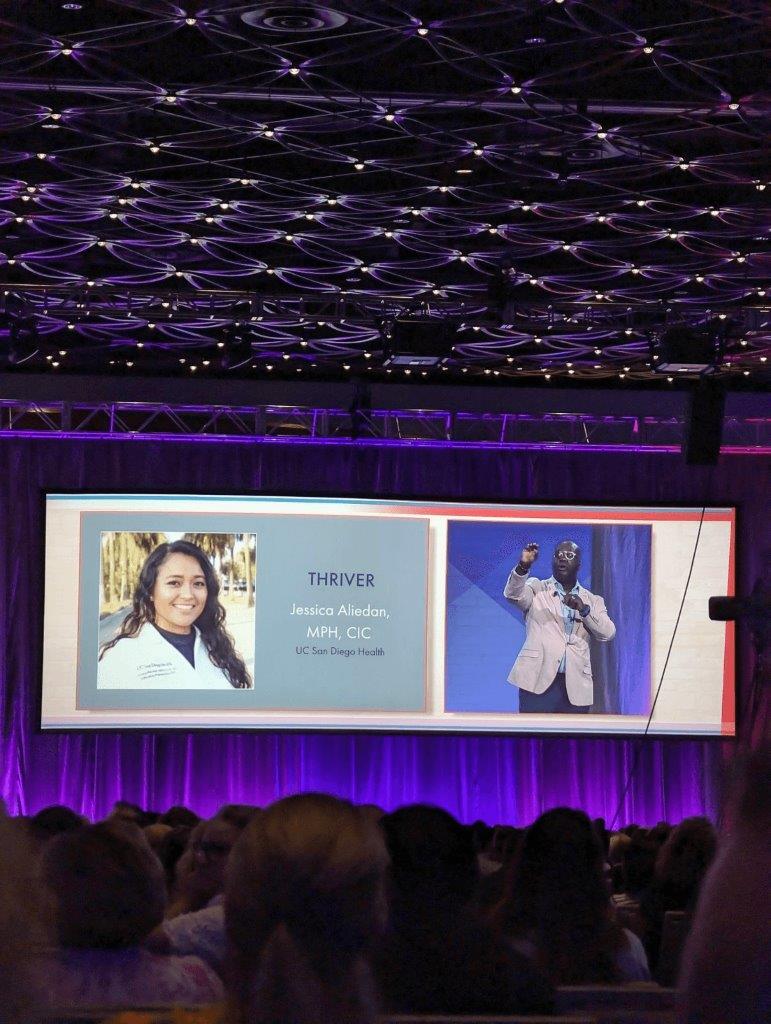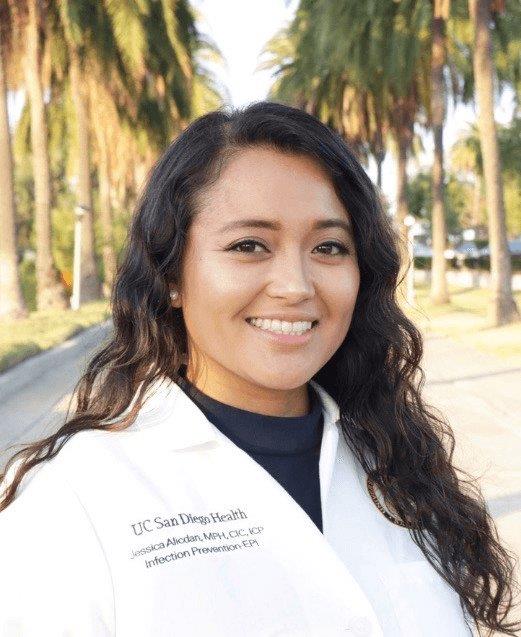





 Today we’d like to introduce you to Jessica Alicdan.
Hi Jessica, we’re thrilled to have a chance to learn your story today. So, before we get into specifics, maybe you can briefly walk us through how you got to where you are today?
No one ever says, “When I grow up, I want to become an Infection Preventionist or a Healthcare Epidemiologist.” Most people don’t know what that career is or confuse an Epidemiologist as a “skin doctor.” Every individual in the field has a unique pathway or stumbled upon the career by chance. My story starts with wanting to make a positive difference and promoting the health of others in our community since I was a little girl.
I’m a first-generation Honduran-Filipino American, that grew up in National City in San Diego, California. My Honduran mother is the backbone of our family and worked multiple jobs to provide the bare necessities for my younger sister and I. One of her part-time roles was working as a Certified Nurse Assistant in an acute care hospital and skilled nursing facility. Little did I know, this core memory of visiting my mother at work would one day be the root of my inspiration for today’s efforts, followed by three monumental figures in my life.
I strived throughout my teen and early adult years, intending to become a medical doctor. The pre-medical pathway is not easy. I dedicated so many of my early years to healthcare getting experience in the laboratory, labor and delivery, critical care areas, and a dermatology clinic. Experiences are important to understand what brings out your passion. It wasn’t until I worked at the San Diego Cardiac Center for Dr. Brian Jaski, a Cardiologist specializing in Heart Failure, that opened my eyes to a new passion and career goal.
I shadowed Dr. Jaski with procedures and how he treated his patients, which helped me realize I was too emotional to work with really sick patients who often passed away. One of the chapters I helped write in his second book, The Four Stages of Heart Failure, was focused on the epidemiology of the chronic disease. The more I looked into the subject and career, the more I admired the idea of helping not just one patient, but a whole population related to public health and disease prevention using science and statistics.
All my pre-med efforts including taking the MCAT and nearly completing my applications to medical school were thrown out the window. I shifted gears and directions into applying to a graduate program for my Master of Public Health (MPH) in Epidemiology. In that journey, I realized early that I wanted to dedicate my career to infectious disease epidemiology, which did not fully exist at the Colorado School of Public Health. I had to pave my way and create a unique focus on getting the experience I needed.
One day in class, I had a guest speaker who was a Medical Epidemiologist talk about hospital epidemiology. Dr. Wendy Bamberg shared details about how public health agencies support hospitals and Infection Preventionists (IP) in preventing and controlling the spread of infectious diseases. This woman said all the right words that captured my interest in the career and I saw beams of light shine around this second monumental figure. Dr. Bamberg offered me an internship that changed my life and gave me a taste of the initial experiences, including how to prepare a whole state for Ebola in 2014.
The third monumental person in my career journey is the current Director of Infection Prevention and Clinical Epidemiology at UCSD Health, Frank Myers. My goal after graduate school was to return to San Diego and work at an academic medical center. In 2015, I returned home, struggling for nearly one year to find a full-time position as an IP with an MPH degree. I felt defeated because all available positions across the nation mostly wanted registered nurses. I joined the Association of Professionals in Infection Control and Epidemiology (APIC) local chapter in San Diego to network, where I met Frank, who is not a nurse. I told him, “I want to be like you!” The efforts may not seem much, but Frank took his time to write to me on LinkedIn, providing career guidance and how to best prepare for the IP role. I studied for the job and followed his guidance. Fast forward in time, I have been an IP since 2016 and I now work at UCSD Health since 2019.
Alright, so let’s dig a little deeper into the story – has it been an easy path overall and if not, what were the challenges you’ve had to overcome?
Schools currently don’t teach the IP subject or career to students. The IP role has many levels of challenges and each day is never the same. You can try to create a set agenda to do daily active surveillance or rounds in hospital departments and clinics, but get a phone call that can derail the whole day that is related to patient safety and operational challenges at work. The first few years in the role are learning how to put out emergency “fires”, balance daily required activities, learn every topic related to the job, and establish relationships with partners. Many sink or swim if you don’t start your career with proper guidance or a mentor because it can feel like you’re drinking water from a fire hose. There are four career stages (Novice, Becoming Proficient, Proficient, and Expert) and six competency domains with sub-domains to carry out the role. IPs are in short supply in the nation’s hospitals, surgical centers, and nursing homes. Before the COVID-19 pandemic, about 25% of vacancy positions were reported. There is an IP staffing shortage with nearly 40% of current IPs expected to retire in the next 5 years from a recent national survey. Last year, the U.S. Department of Labor issued the “Infection Preventionist National Occupational Framework,” as it was recognized there is no roadmap to the career and more efforts are needed to bolster the IP staffing shortage and build a strong future workforce.
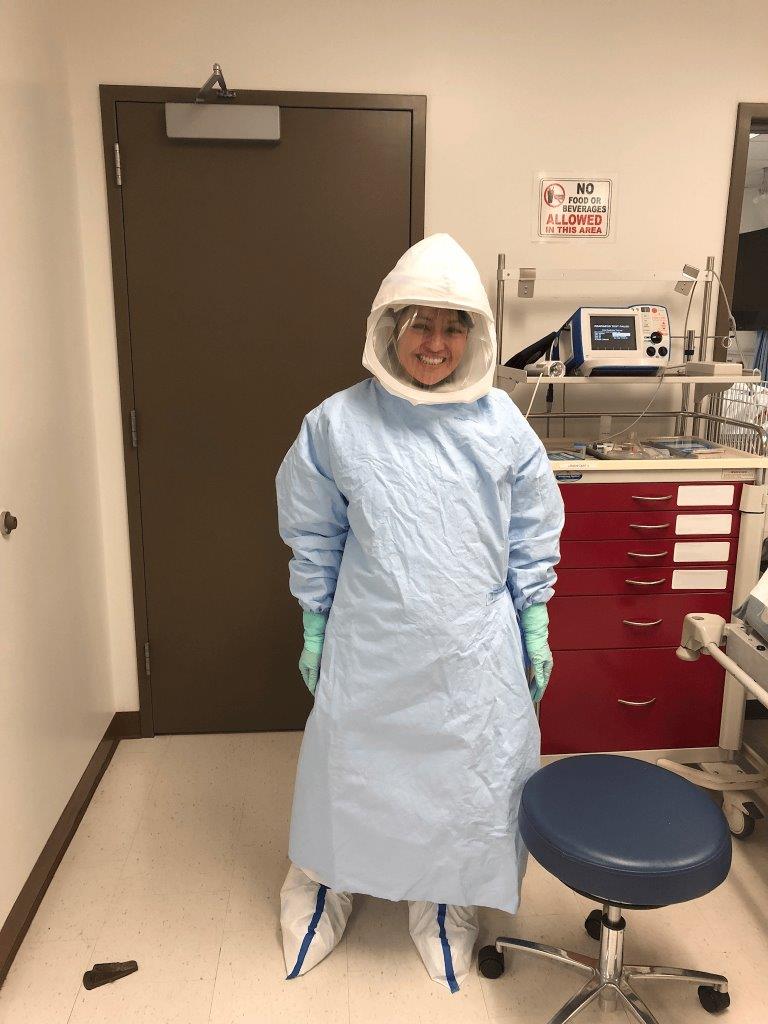
The highest level of challenges is when our community is at risk for an outbreak from an infectious disease that can spread fast. We try to prevent anything similar to the 1995 movie Outbreak or the 2011 movie Contagion. Since 2014, I’ve gained the experience of preparing Colorado for Ebola. Throughout 2017 and 2019, I stayed active in the Infectious Disease Emergency Response team at UCLA Health for Ebola preparation and actively worked during the resurgence of measles in Los Angeles, in 2019. The COVID-19 pandemic was the worst of all outbreaks in my career, followed by Mpox in the timeline. The pandemic set a whole new meaning of challenges where social media, politics, supply chain shortages, and lighting-speed science continued to evolve with viral mutations, interfering with our mitigation strategies and how we normally function in controlling outbreaks in healthcare and our community.
Thanks for sharing that. So, maybe next you can tell us a bit more about your work?
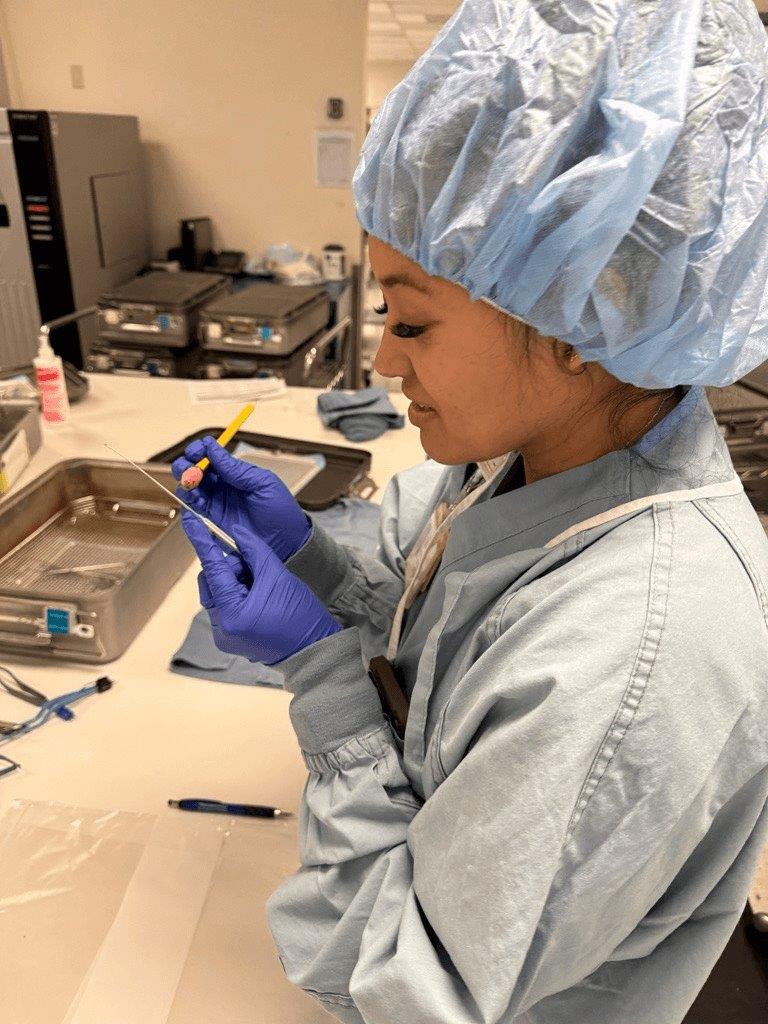
The IP role wears many hats and is expected to be diverse as a subject matter expert (SME) in many areas. In my full-time role, I am recognized as a dedicated leader in my health system organization. My assignments and niche have recently shifted from preventing bloodstream infections linked to vascular access devices to quality performance improvement in endoscope reprocessing and management to prevent the spread of infections to patients. Most of my time and research are now dedicated to endoscope reprocessing methods in high-level disinfection and sterilization techniques as there is a huge gap in the field to advance guidelines and regulations.
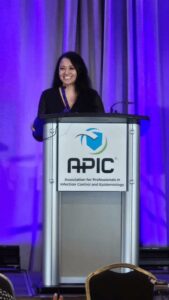
I am actively involved in my professional organization, APIC at the local and state level. Recently, I served as Education Chair for the San Diego and Imperial County chapter, where I started the first active mentorship program in the state of California. I have been elected to a two-year term as California’s APIC President for 2025 and 2026. I am deeply honored by this acknowledgment and achievement because I dreamt of becoming the state president to push the needle forward since I started my career. In the near future, my goals at the state level are to support newcomers into the field as interns and early career professionals by launching a statewide mentorship program and supporting IPs in rural community hospitals.
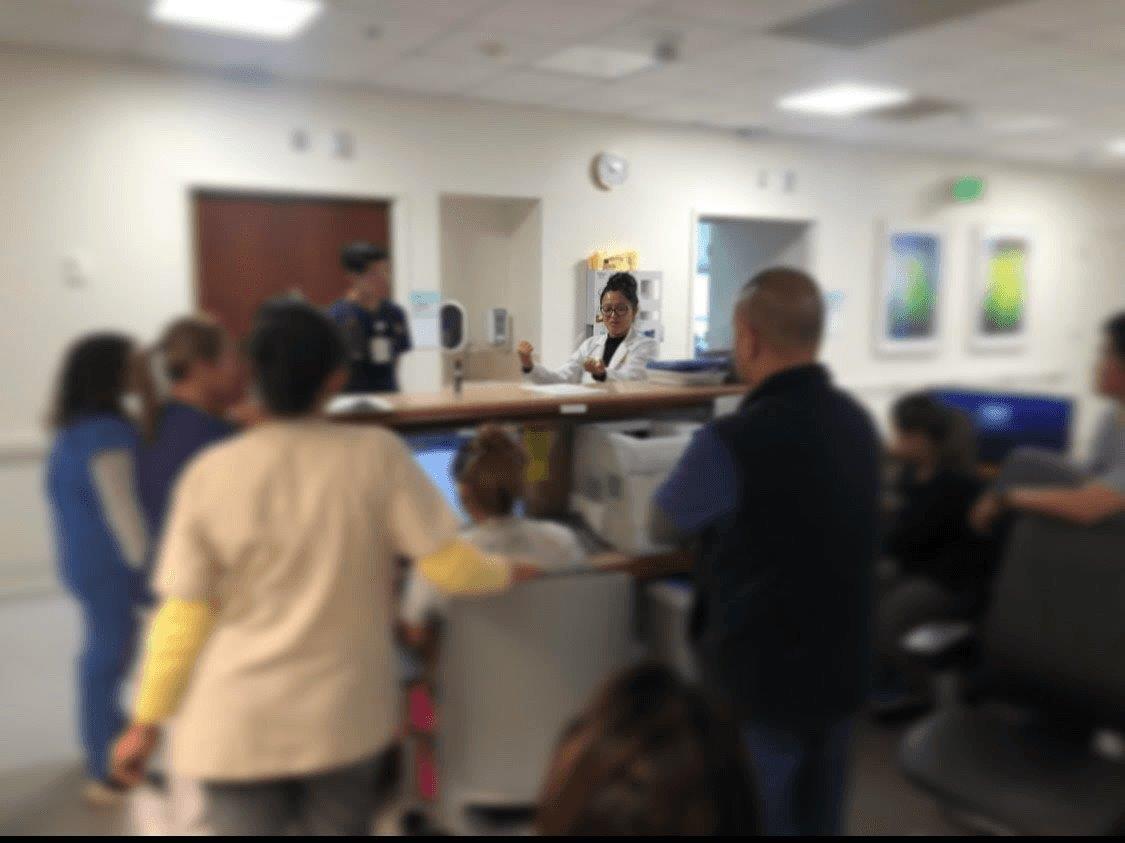
Recently, I have been known for the creative content I post on Instagram or for colleagues close to me, the GIF with “tiny hands”, featured on The Final Straw (S1E4 on abc). I love teaching, which led me to start my @SomethingInfectious account on Instagram, consulting as an international independent contractor, and presenting at national conferences. Initially, I started @SomethingInfectious to teach against the misinformation broadcasted as I was actively working at the start of the pandemic. I was very involved in preparing my hospital when President Donald Trump sent the three planes from Wuhan, China to the Miramar base and passengers had respiratory symptoms. As the pandemic progressed, I stayed active working tirelessly with my amazing team, while still managing the education and communication to keep everyone I cared for in multiple communities up-to-date with the evolving science. Through those challenging times, I learned I had more than just passion, but grit.
Have you learned any interesting or important lessons due to the Covid-19 Crisis?
The Infection Preventionist role is a thankless job. We will never hear a community or person say, “Thank you for preventing the infection I didn’t get.” We do this job because we care and not many are trained to carry out the tasks involved in the job. The running joke with my colleagues is, “How many more pandemics do you have in you until you call quits or retire?” Some say one and many say none. The COVID-19 pandemic took years out of our lives and caused PTSD, however, it brought us into the spotlight to showcase what we do best as we normally work in the background. Because of this new recognition in the spotlight, more efforts are being made to improve the national shortage of IPs and collaboration with local public health agencies. While we never wish for future emerging infectious disease crises, we must always be prepared. There are many important lessons learned that can be applied to mitigating future outbreaks and global crises.
A common theme I experienced with all outbreaks in my career is battling the media with misinformation and fear-mongering. In the community, if we can work collectively from the beginning with the media to deliver transparent and helpful communication to teach proactive prevention measures, we could be more prepared to face challenges and exposure events as a community. There was a misconception that hospitals were high-risk areas for getting infectious diseases, but in reality, it was the community that was at the highest risk as people didn’t have resources like tests to detect the virus and hospital-grade masks to protect themselves. As a professional in the field, we know how to protect ourselves to help contagious people. Healthcare workers have resources like negative pressure rooms, personal protective equipment, and are trained to follow strict policies and procedures to prevent the spread of diseases.
For all future emerging infectious disease crises, it is critical to keep up with the science and receive knowledge from reliable sourced information. I never expected masks to become political. Hospital-grade masks are important tools to prevent the spread of diseases. Source control was never a new practice. If we suspect or confirm a patient has a respiratory infection or airborne disease like an active infection of tuberculosis, then the patient wears a surgical mask to prevent expelling bacterial particles that are contagious to other people nearby. For us healthcare workers, we protect ourselves from becoming exposed by wearing surgical masks and protective eyewear during direct patient care with a contagious person. It works both ways to protect ourselves and the people around us which is an important lesson for the community to understand. Also, don’t ask me about the shortage phenomenon of toilet paper as that is still a mystery to me.
Lastly, always make rational decisions about prioritizing the safety of people as opposed to following the standards and expectations because the rules and regulations soften up. Many hospitals stopped using surgical masks to protect themselves post-pandemic without confirming if our city was at moderate or high levels of respiratory infections which caused high exposure events and critical staff shortages. It’s important to find the balance and compromise as community risk levels shift as our new normal. Being proactive is better than being reactive to prevent challenging and harmful situations. This is the most valuable lesson I learned thanks to my Medical Director Dr. Francesca Torriani and Frank Myers, who are fearless leaders dedicated to the field.
Contact Info:
- Instagram: www.instagram.com/somethinginfectious/
- Linkedin: www.linkedin.com/in/jalicdan