




Today we’d like to introduce you to Debra Slate.
Hi Debra, thanks for joining us today. We’d love for you to start by introducing yourself.
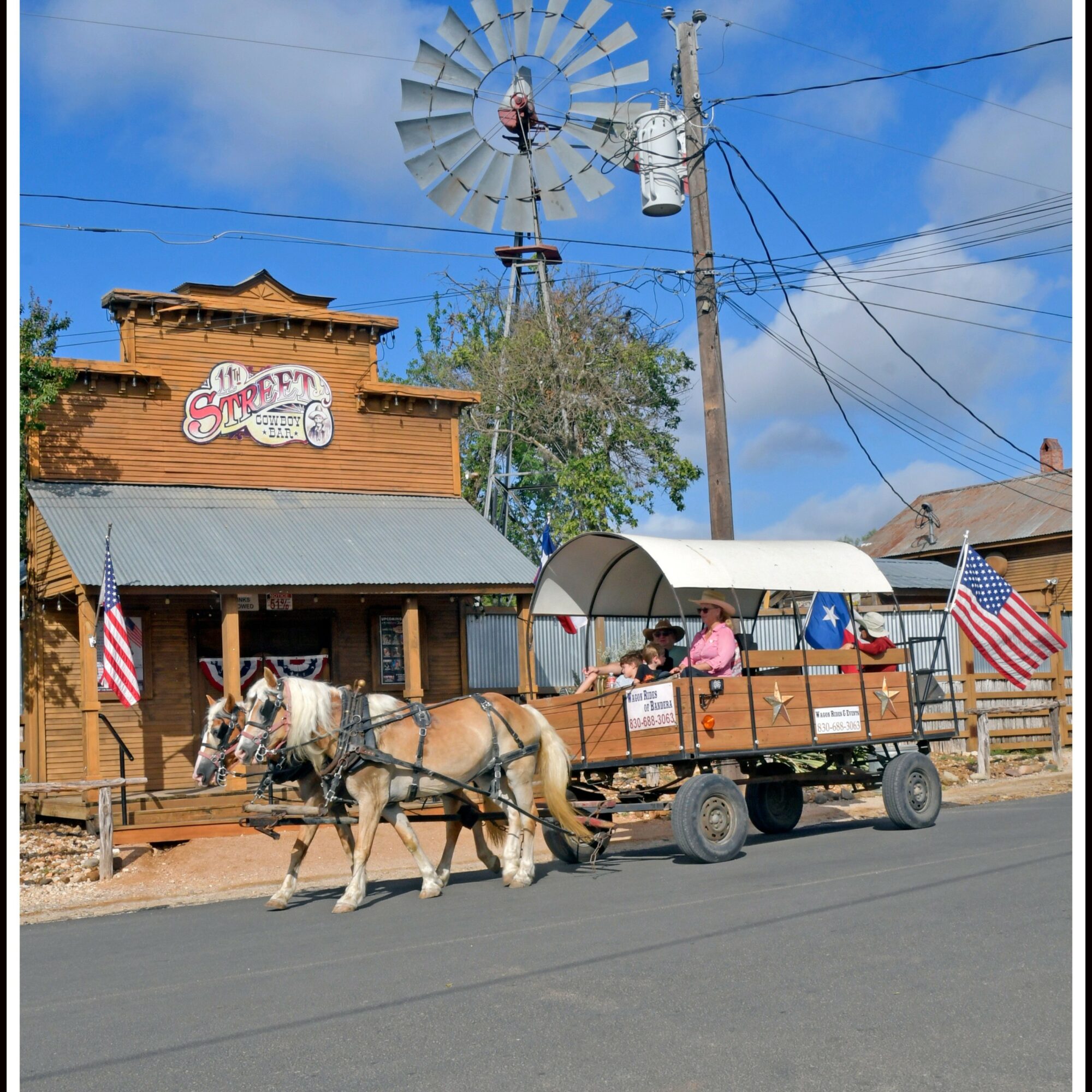
When we moved to Bandera, TX in 2012 I saw a man driving his team of 4 horses and his covered wagon. I thought to myself “I would like to learn how to do that!”. I like to learn about unique activities and food in any area we visit. One Saturday I went up to the old cowboy driving the wagon and asked him if he would teach me…he said Yes.
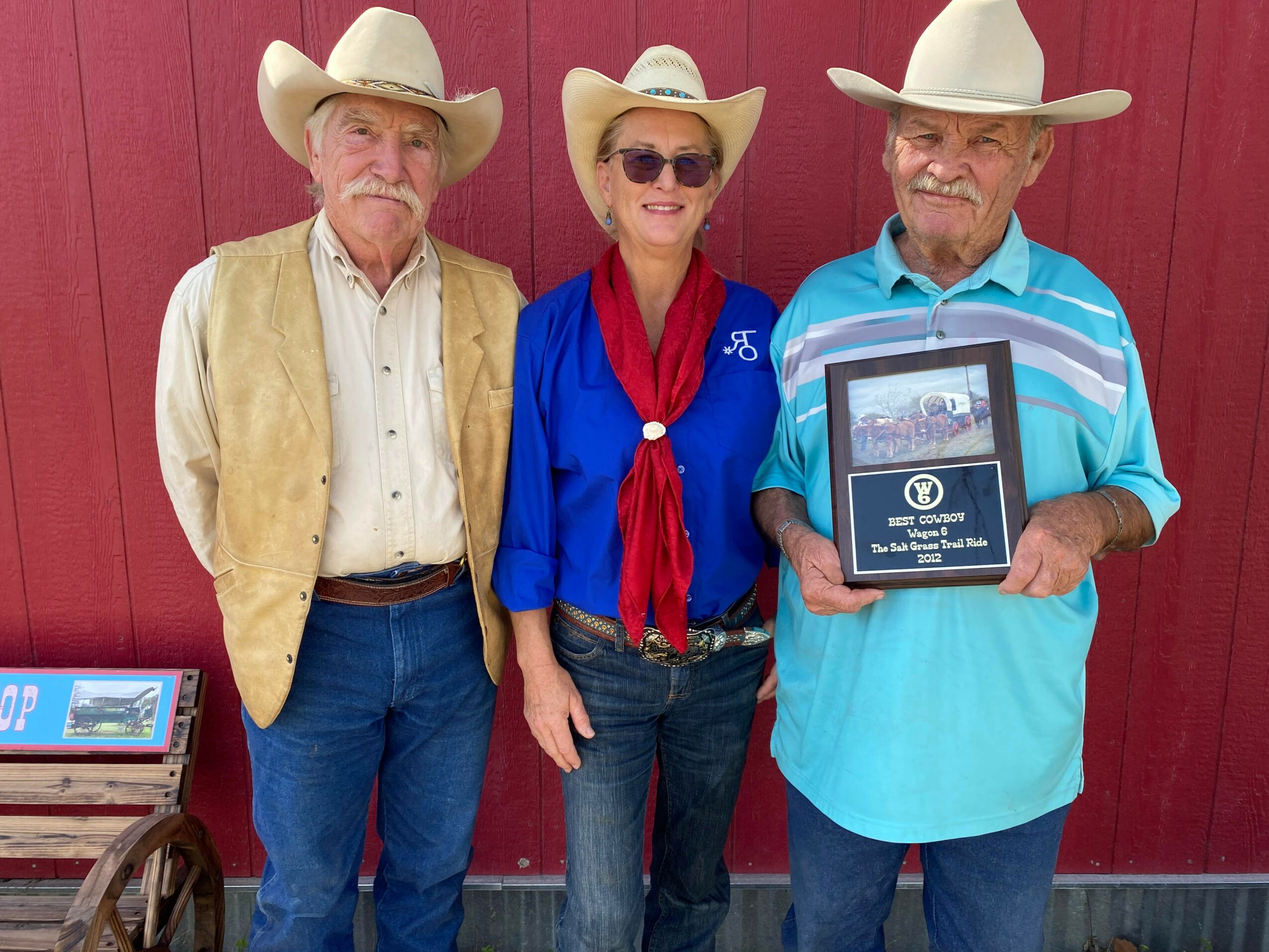
As it turned out, the old cowboy’s name is Ron “Dakotah” McGilvrey and he had been driving a team of horses and wagon for over 30 years across the USA and eventually settled in Bandera, TX with his artistic partner Teri Freeman in 2011. Dakotah taught me how to drive a single horse, then a team of 2 horses. I would join him on his horse-drawn covered wagon on Saturday mornings as part of “Cowboys On Main” in the lively town of Bandera, with gunfight reenactments, music, and a saddle steer.
I also spent time driving with Wes Hatch. He had four Belgian-cross mules and taught me how to drive the team of four. We drove two mules most of the time because it is so much easier! Wes and I would join Sunday Fundays, and trail rides with his wagon. I loved every minute of it. I was honored when Wes called me a “muleskinner” (which is an older term that means someone who manages mules…mules think very differently than horses). Later, Dakotah announced that I was an official Wagonmaster (a term for someone who is in charge of a wagon, or wagon train). Sometimes I am called a Teamster, a term for someone who drives a team of draft horses probably hauling cargo. Interesting fact, the term Teamster lives on today as the International Brotherhood of Teamsters (IBT) referring to North America’s most divers labor unions, including truck and delivery drivers. There are many horse-related terms that have carried into our current language.
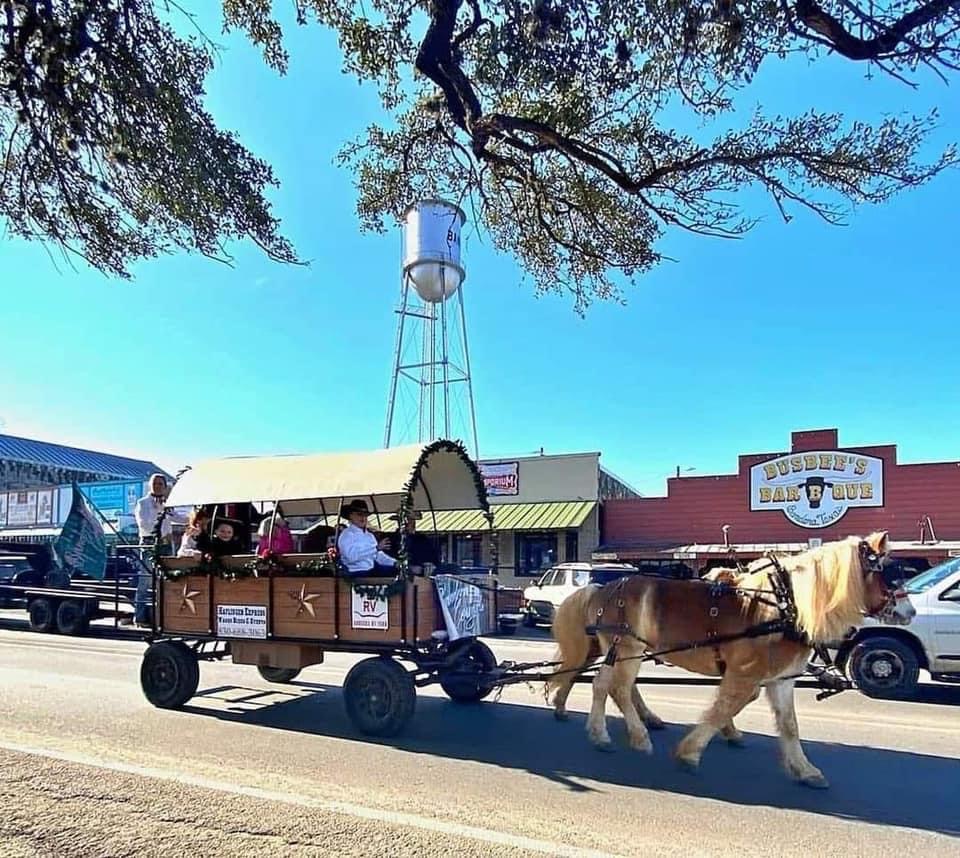
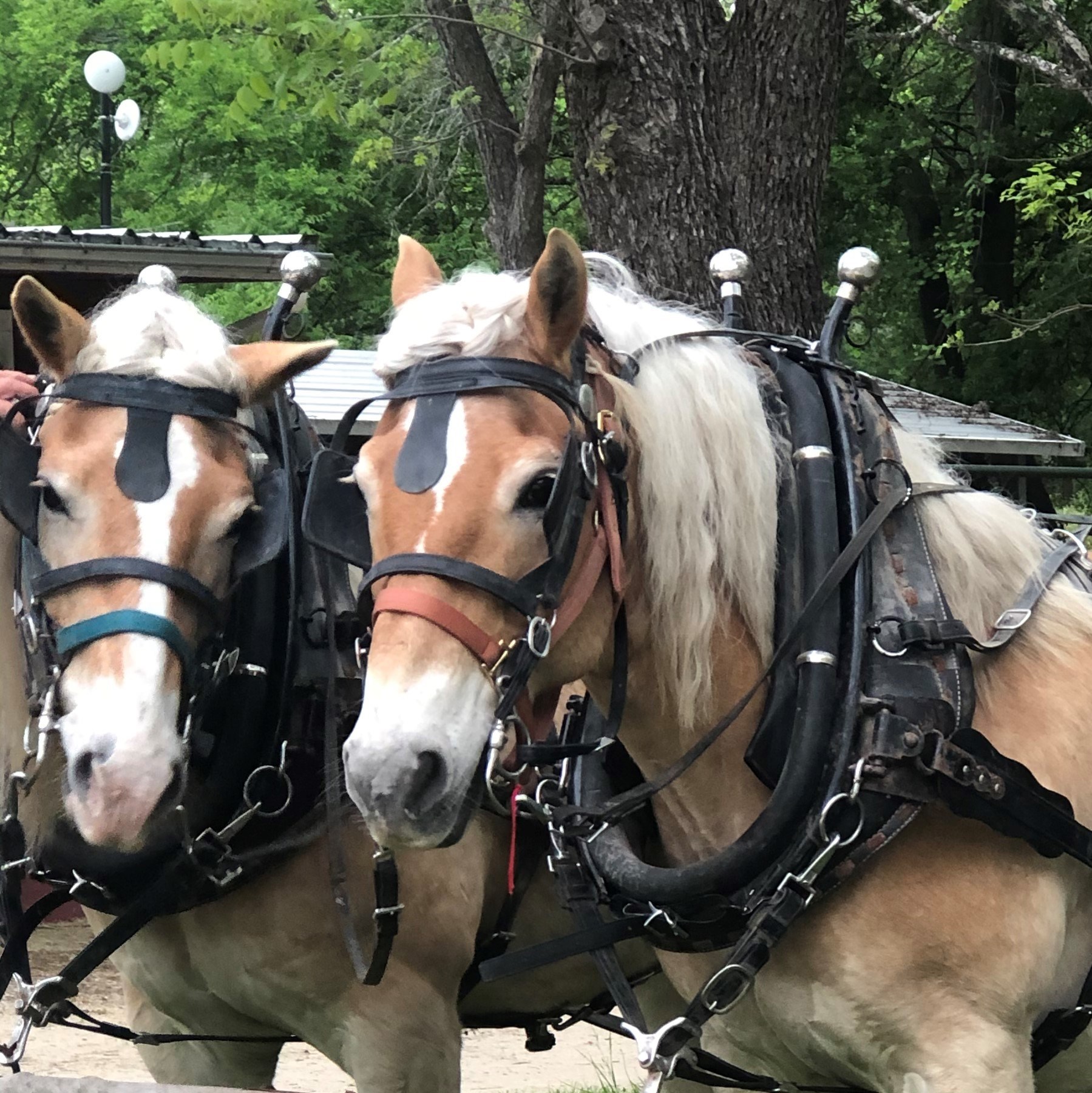
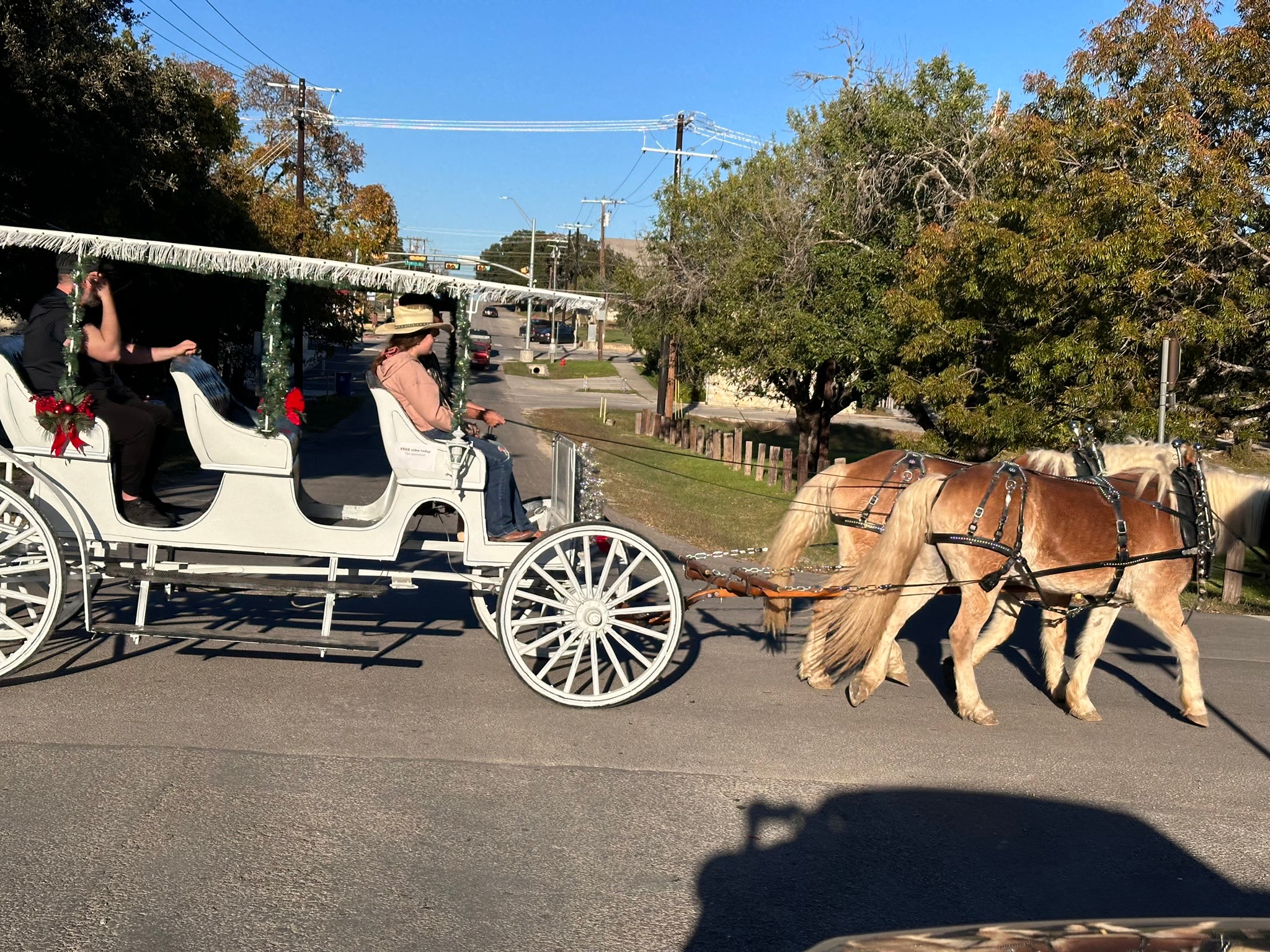
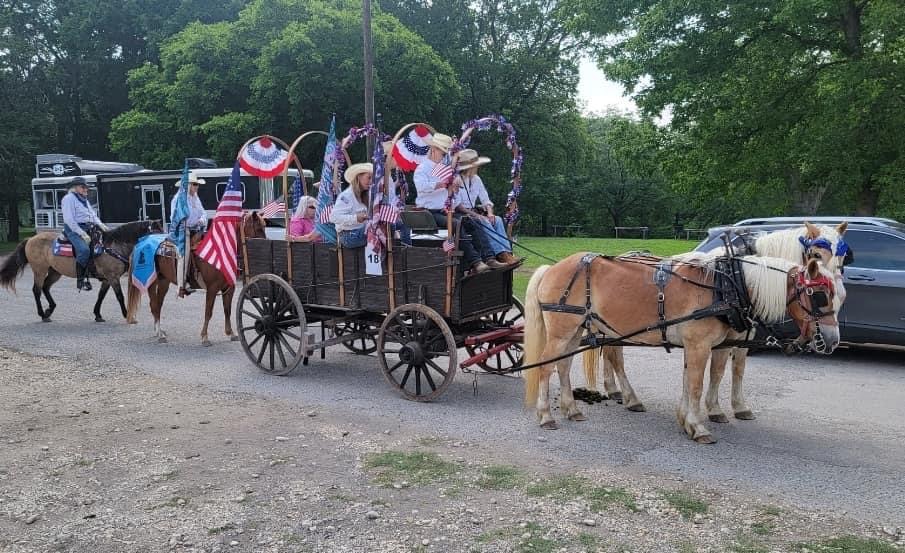
In 2020 I officially set up my own carriage business when I bought a team of trained Haflinger horses and my own covered trail wagon. Wagon Rides of Bandera has grown to include a white carriage often used for romantic rides or weddings, and an authentic 1909 Bain farm wagon that we use mostly in parades or rodeo grand entry events. I am blessed to have friends that enjoy helping, including two that are trained to drive my team, and my husband Scott who is able to help with logistics and repairs. Fun fact, on many Friday evenings we have “Haffie Hour” (Haffie is short for Haflinger), to groom both horses then braid their manes and tails if the weather is hot. Haffie Hour is as much a social event as it is a horse grooming event.
Dakotah has retired, lives just outside of Bandera, and still has one horse. Now my horses and I participate in Cowboys On Main in Bandera. My little carriage business has grown and we have been part of events 2 hours away. However, most of the business still comes from showing off our rustic lively town of Bandera, TX. For more info, our website is www.WagonRidesOfBandera.com
Do you want to learn more about driving a carriage, a cart, or a wagon? It can be for fun, or if you are competitive you can even compete in Texas and beyond. I currently have two students and would welcome any questions you might have.
Here’s a website about my 1st teacher, Dakotah https://www.appeal-democrat.com/mcgilvery-enjoys-horsing-around/article_80afe003-a4b9-56bd-8449-2c315874f609.html
We all face challenges, but looking back would you describe it as a relatively smooth road?
Owning livestock is rarely a smooth road. Since 2020 I have had as few as two, and as many as five horses. Three horses seems to be my sweet spot where it is manageable to care for them and pay for feed. Equipment needs maintenance. Sometimes a horse needs extra care. For the most part, though, the business has been predictable and easy enough to plan for. We live on a smaller piece of property and in order to keep my horses fit I need to get them out and ride or drive them (which is more of a joy, than a struggle 🙂
I will always wish for more horses, bigger trailers, more horse-drawn vehicles. But I don’t want to turn my hobby into a job and take on debt. The right horses and the right opportunities will come my way.
Appreciate you sharing that. What else should we know about what you do?
What sets me apart from others carriage businesses? The horse-drawn covered wagon in a cowboy town. Also, there are few carriage businesses and I don’t feel any competition. In fact, I have called upon several within a 2 hour drive to refer business to them, and to ask for help in one of my larger events.
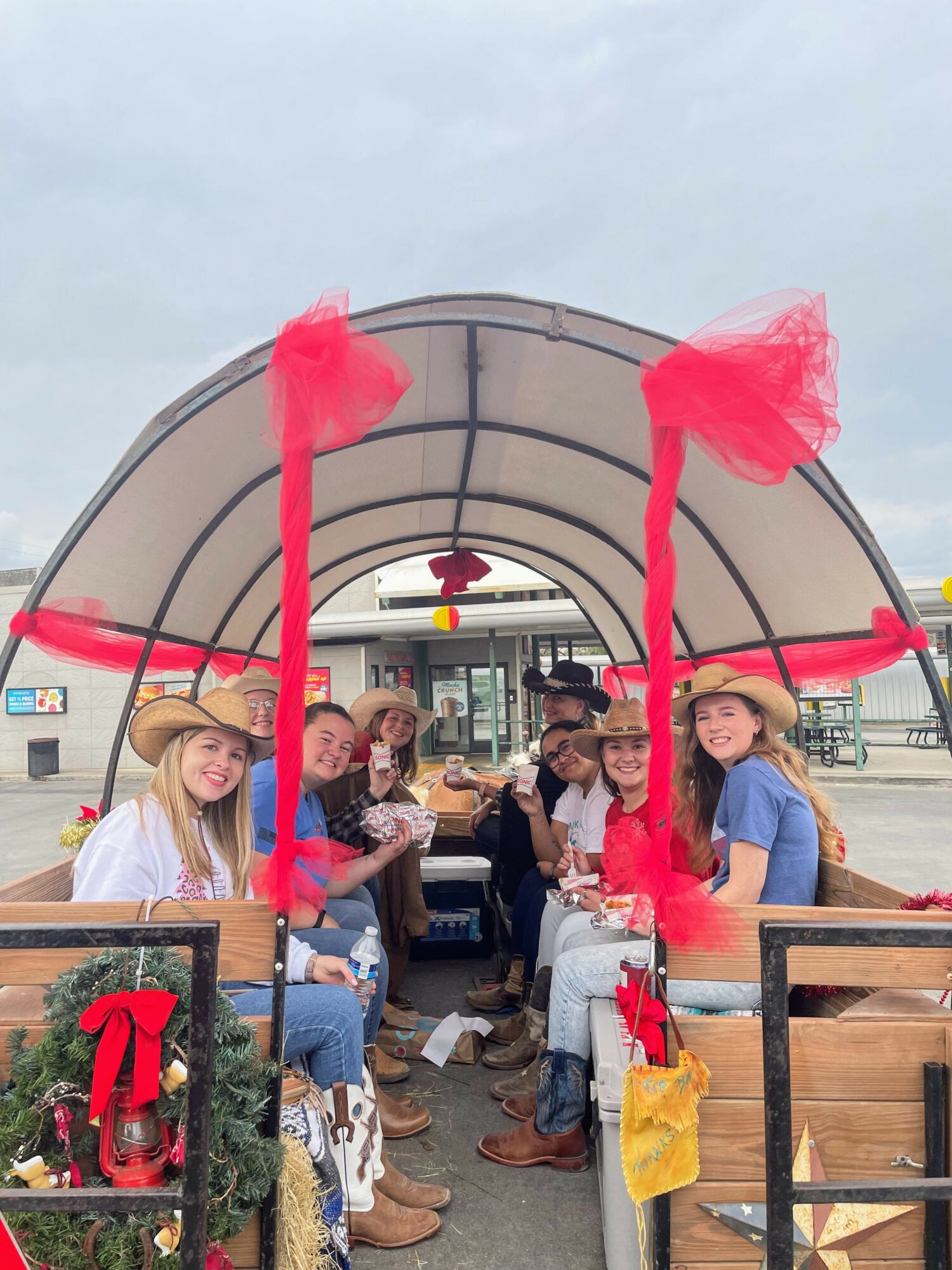
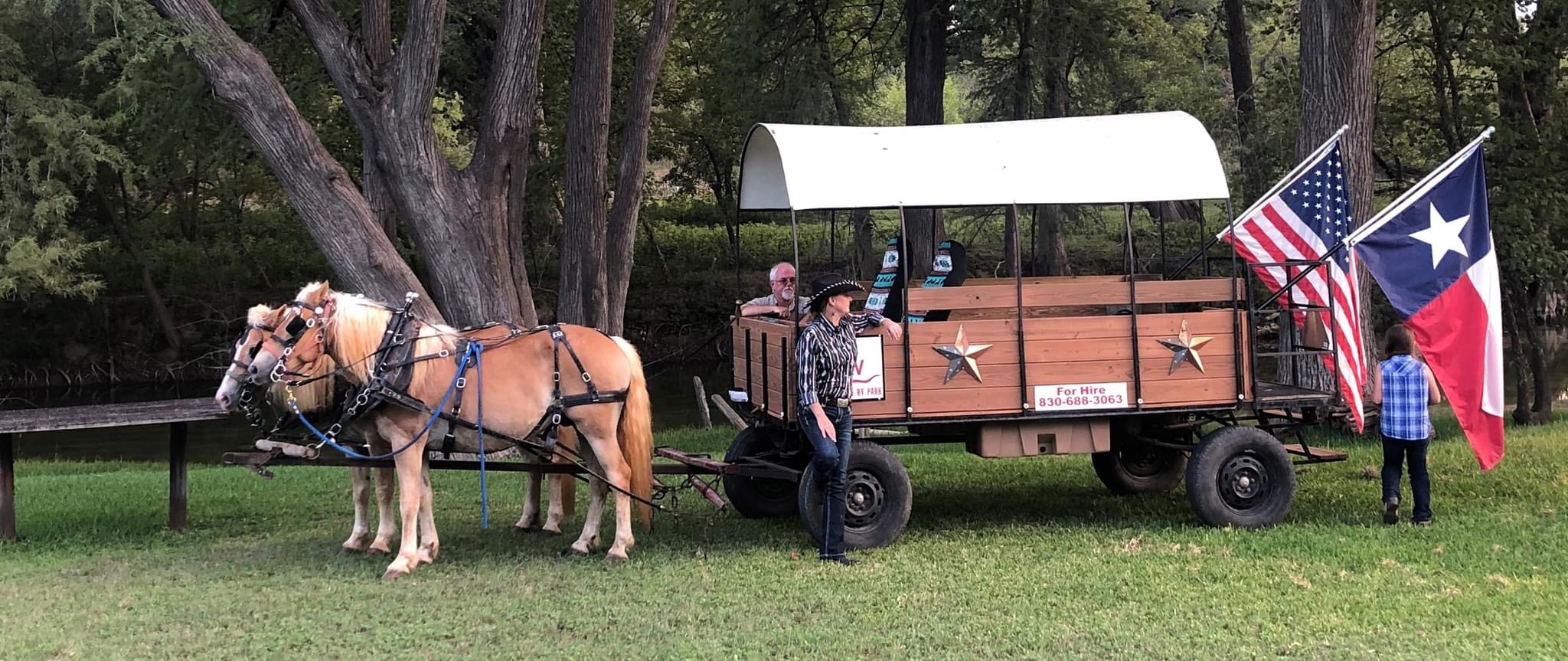
I learned that in order to make money that I would need more than a 2-person cart. That is why I have the horse-drawn vehicles that I do. The variety that I have helps me fit into a variety of events or activities. The covered trail wagon is the most comfortable, seating up to 10 people, and is the one I use the most. The white three-seat surrey seats up to 6 people and is stunning to look at. We are part of parades and weddings several times a year. The authentic wooden-wheeled farm wagon looks great in pictures and although we use this one the least, I am honored to own a part of authentic western history.
It is a challenge to orchestrate an event out of town. I am blessed with friends and a husband that help with all of that. Sometimes it takes 2 trucks, 2 trailers, and 3 people to make an event happen! On the flip side of that, a horse-drawn covered wagon ride in town is something that I often do without any help, because I have two very-well-trained and trusting horses. I harness them, hitch them to the wagon, and then drive them into town for fun, and to give paying customers a one-hour tour of our town. During the Holidays we also offer night rides to enjoy the lights at our city’s park.
I am currently teaching new drivers and that is my current challenge! Thankfully, my horses trusting and forgiving. They are good teachers, too. The lessons include reading, some research, some time with the horses while on foot, and lastly driving the horses from a cart or wagon. I enjoy teaching.
Risk taking is a topic that people have widely differing views on – we’d love to hear your thoughts.
Risk. Working with livestock involves risk. Sometimes they spook, get sick, break through a fence, I have lost one horse to an inoperable tumor. Then there’s the financial risk. in 2020 I purchased hay at $7.50 a square bale of coastal. That same bale is now $11. Grain has gone up too. The two Haflinger horses eat one bale a day. That is $11 a day on hay alone.
I view myself as a calculated risk-taker. In the end for this business, once I quit enjoying horses or driving then I will quit (I still love it after a decade). Until then, being safe so no-one is hurt helps mitigate the possibility that we will hurt someone. When feed costs more, then I hustle a little more to get more business. When times are good, I upgrade tack or maintain equipment. I buy hay in bulk to get me through the lean times of the year.
I choose to have this business debt-free. Because the risk on taking on a loan turns this hobby into a job. So I pass on that risk.
Pricing:
- check the website
Contact Info:
- Website: https://www.wagonridesofbandera.com/
- Instagram: https://www.instagram.com/wagonrides/
- Facebook: https://www.facebook.com/WagonRidesofBandera/